What if the strict planning rules that often feel like a barrier to your dream renovation are actually the secret to protecting your property's long-term value? Most homeowners in the Lake District understand that balancing modern living with traditional stone architecture is a delicate task. You likely want to replace dark, damp interiors with a light-filled sanctuary; yet the fear of a planning rejection or choosing materials that won't survive a Cumbrian winter often holds you back. This Guide to extensions for Cumbrian Homes is designed to remove that uncertainty and help you plan a project that is both beautiful and compliant.
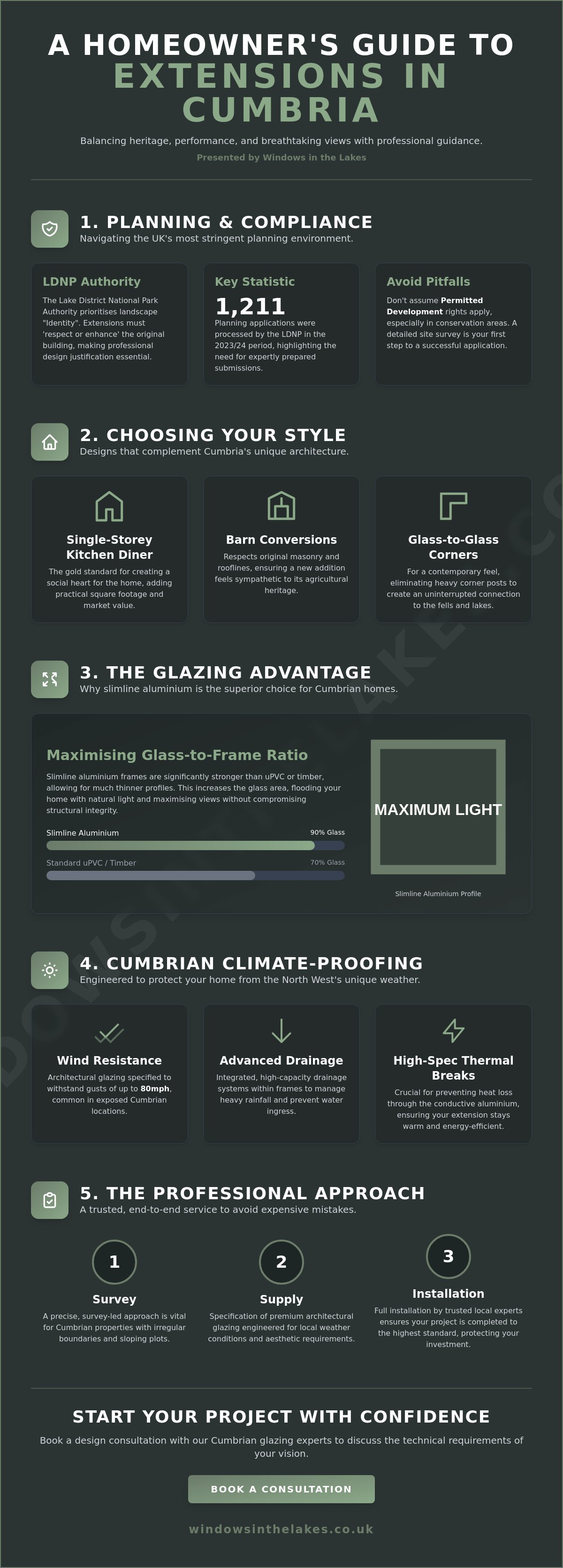
We agree that your home should be a reflection of its stunning surroundings, not a battleground for planning disputes. With the Lake District National Park Authority processing 1,211 planning applications in the 2023/24 period, professional design justification is now essential for success. You'll discover how to navigate these regulations, preserve local character, and specify premium architectural glazing that stands up to 80mph winds. We'll walk you through the essential steps to achieve a successful planning approval and create an energy-efficient space that adds genuine market value to your property.
Key Takeaways
- Learn how to navigate the complexities of Lake District National Park planning permissions whilst balancing stone-built heritage with contemporary lifestyle needs.
- Consult our Guide to extensions for Cumbrian Homes to discover how glass-to-glass corner designs can maximise your views of the fells and lakes.
- Understand why slimline aluminium is the superior choice for architectural glazing, providing the perfect glass-to-frame ratio without compromising on thermal performance.
- Identify the essential weatherproofing features required to protect your home from the North West's unique climate, from advanced drainage to high-specification thermal breaks.
- Discover why a professional "Supply, Survey & Full Installation" approach is vital to avoid expensive mistakes and ensure your project is handled by trusted local experts.
Planning Your Extension in the Cumbrian Landscape
Extending a property in Cumbria requires more than just a builder; it requires a deep respect for the 6,700 square kilometres of unique landscape that define our county. This Guide to extensions for Cumbrian Homes starts with the most critical phase: planning. Most projects fail not because of poor construction, but because they ignore the delicate balance between traditional stone-built heritage and the desire for light-filled, contemporary living spaces. You aren't just adding a room; you're evolving a piece of Cumbrian history.
Understanding Local Planning Constraints
If your property sits within the Lake District National Park (LDNP), you're dealing with one of the UK's most stringent planning environments. Unlike standard local councils, the LDNP Authority prioritises the "Identity" of the landscape above all else. While Permitted development rights allow some flexibility for minor alterations, properties in conservation areas or those with Article 4 directions often require full planning permission. Don't assume your project falls under permitted rights without professional verification.
A common pitfall is submitting designs that clash with the LDNP Design Code. This document mandates that extensions must either "respect or enhance" the original building. In 2023, approximately 25% of planning applications in sensitive areas faced initial delays or rejections due to inappropriate scale or materials. To avoid these setbacks, your application must articulate how the new structure complements the existing dwelling through careful material choice and sensitive positioning.
The Role of Heritage in Modern Design
In towns like Kendal and Penrith, the "built form" is the defining characteristic of the streetscape. You must consider how a new roofline interacts with existing Westmorland green slate or how modern aluminium glazing textures sit against local limestone. It's about creating a dialogue between the old and the new. Preserving the texture of the Cumbrian landscape doesn't mean you can't use modern elements; it means those elements must be specified with precision.
- Rooflines: Ensure the pitch matches or complements the original structure to maintain visual harmony.
- Material Textures: Use high-quality finishes that mirror the ruggedness of local stone.
- Survey-Led Precision: A detailed survey is essential for homes in Windermere or Keswick, where sloping plots and irregular boundaries are common.
Starting with a survey-led approach ensures that your extension footprint doesn't just meet legal requirements but also maximises the specific light levels of your plot. If you're unsure how these constraints affect your specific vision, you can book a design consultation to discuss the technical requirements of your project. We find that early education is the best way to protect homeowners from expensive mistakes later in the build process.
Choosing the Right Extension Style for Your Property
Cumbria's architectural landscape ranges from Victorian terraces in Carlisle to traditional stone barns in the Eden Valley. Selecting the right style is the first step in any successful project. For most families, the single-storey kitchen diner remains the gold standard. It's a practical way to add square footage while creating a social heart for the home. This Guide to extensions for Cumbrian Homes highlights how the right design choices can significantly increase both your living space and your property's market value.
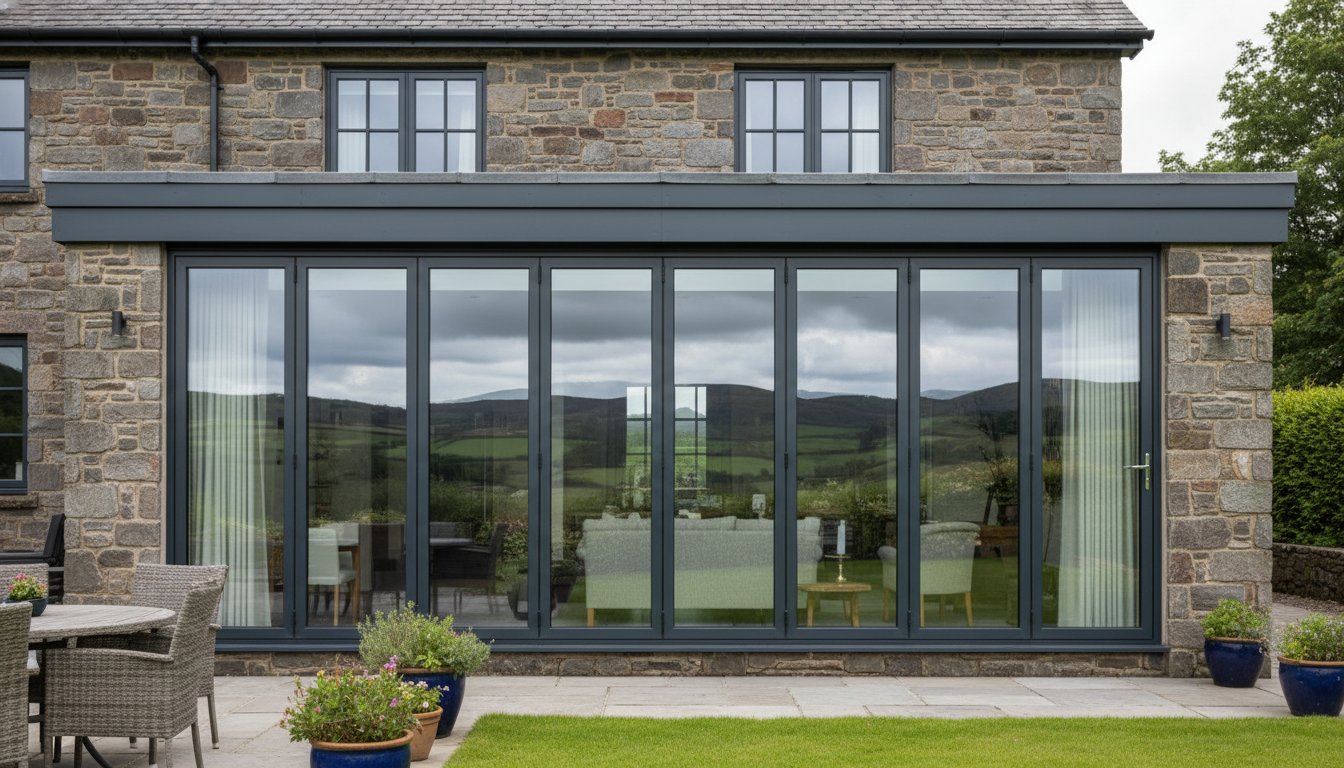
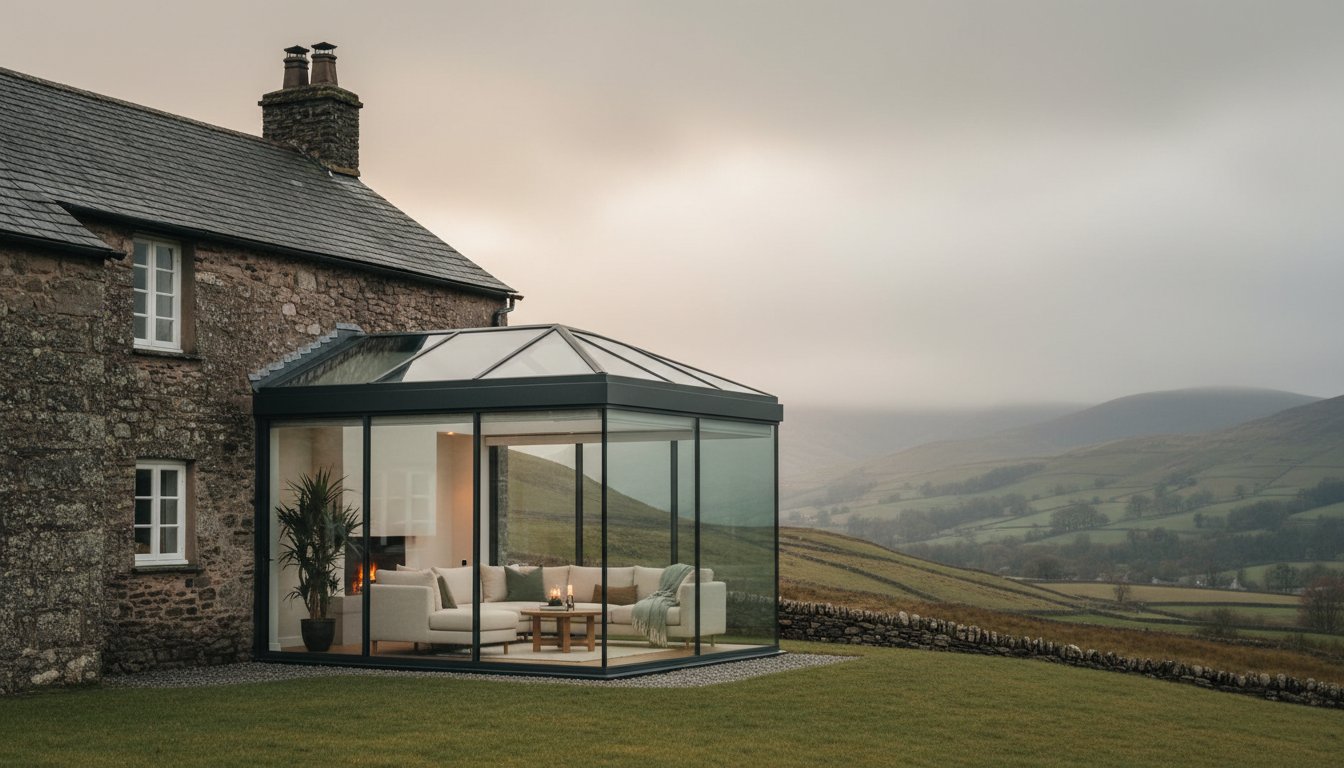
In rural settings, barn conversions and "lean-to" styles are often preferred. These designs respect the original masonry and rooflines of agricultural buildings, ensuring the new addition feels sympathetic rather than bolted on. If you're considering a more contemporary addition, glass-to-glass corner extensions offer an uninterrupted connection to the outdoors. These structural glazing solutions eliminate heavy corner posts, which is essential for properties overlooking the fells or lakes.
When comparing orangeries to modern glazed extensions, thermal performance is the deciding factor in the North West. While orangeries offer a classic aesthetic with more brickwork, modern aluminium extensions with high-specification glazing typically provide superior U-values. This ensures the space remains comfortable during a Cumbrian winter, not just in the height of summer. Before you begin, it's vital to check Cumberland Council planning permission requirements to see if your chosen style falls under permitted development or requires a full application.
Kitchen and Living Room Expansions in Penrith and Carlisle
In urban areas like Penrith and Carlisle, the goal is often to bring light into deep, narrow floor plans. We frequently help homeowners replace dark, cramped kitchens with open-plan hubs featuring flat rooflights. These allow natural light to flood the centre of the room, even on overcast days. To keep the space functional, internal glazed partitions are a smart choice. They maintain the flow of light whilst dampening noise between the kitchen and living areas. You can explore our featured projects for inspiration to see how these elements transform traditional layouts.
Maximising Views in Windermere and Ambleside
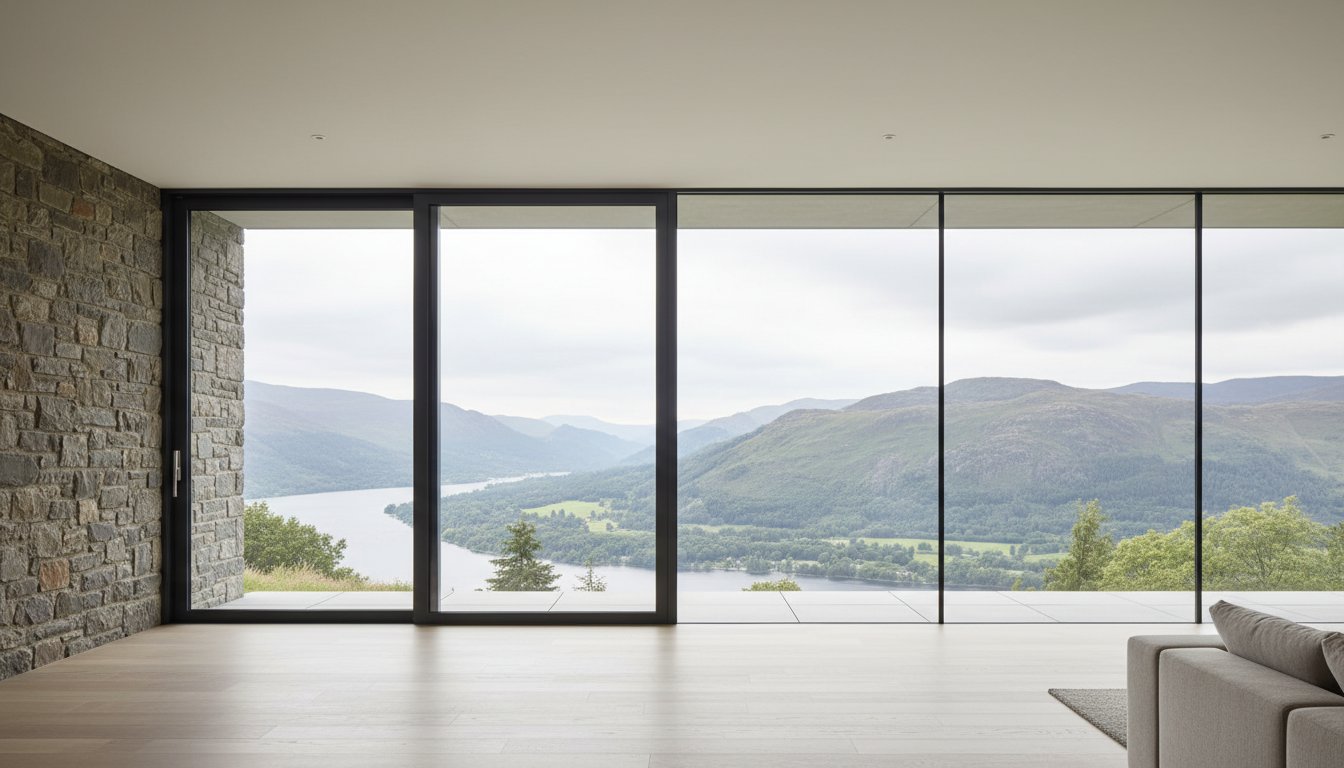
In the Lake District, the landscape dictates the design. In Windermere and Ambleside, we focus on positioning glazing to frame specific peaks or water views. Large-scale sliding doors are often the preferred choice over bifolds in these locations, as they offer slimmer sightlines and larger glass panes. This creates a seamless indoor-outdoor flow that makes the garden feel like part of the room. "Picture windows" have also become a staple in this Guide to extensions for Cumbrian Homes. They act as living art, capturing the changing seasons of the Lakeland fells through high-performance, slimline aluminium frames.
The Architectural Glazing Advantage: Light, Views, and Performance
Choosing the right glazing is the most critical decision you'll make when following a Guide to extensions for Cumbrian Homes. While traditional timber or uPVC might seem familiar, aluminium has emerged as the superior choice for the North West. Aluminium frames don't warp in the damp Cumbrian climate, and they offer a strength-to-weight ratio that allows for incredibly slim profiles. This "slimline" benefit means you maximise the glass-to-frame ratio, ensuring that whether you're looking out over the Eden Valley or a private garden, your view remains unobstructed by bulky plastic or wood.
For homeowners in Victorian Carlisle terraces, architectural glazing bridges the gap between historic stone and modern living. Heritage-style aluminium frames allow you to achieve a classic Crittall aesthetic without the thermal inefficiencies of old steel. These systems meet the latest Building Regulations for fuel and power, providing U-values as low as 1.2 W/m²K. This ensures your new extension stays warm in January whilst flooding the space with natural light that highlights the texture of original masonry.
Bifolding vs. Sliding Patio Doors for Your Extension
Bifolding doors are a popular choice because they concertina back to create a 90% clear opening. It's the perfect way to merge your indoor and outdoor spaces on those rare, beautiful Cumbrian summer days. Sliding patio doors often provide a better year-round experience for different reasons. Because sliding panels are larger, they require fewer vertical frames; this offers clearer views during the winter months when the doors stay closed. If you're torn between styles, you might find our guide on Comparing French vs. Bifolding Doors for Kendal Patios helpful for weighing up your options.
Rooflights and Lanterns: Bringing the Sky In
Deep floor-plan extensions often suffer from a "dark core" where the centre of the house loses its connection to natural light. Installing flat rooflights or lanterns is an effective way to pull light deep into the room. Modern flat rooflights offer a minimalist, edge-to-edge glass appearance that suits contemporary designs. Beyond aesthetics, high-performance glazing in these units is vital for thermal control. They reflect solar heat in the summer while retaining internal warmth, ensuring your extension remains a comfortable, usable space 365 days a year. This careful specification helps prevent the common mistake of creating a room that is too hot in July and too cold in December.
Weatherproofing and Thermal Efficiency for the North West
Building an extension in Cumbria presents unique environmental challenges that national builders often overlook. The infamous "Lake District Rain" isn't just a local joke; it's a structural hurdle. High-performance drainage channels and multi-layered weather seals are essential to prevent water ingress during horizontal downpours. Modern aluminium systems use advanced thermal breaks, which are polyamide strips separating the inner and outer frames. This technology stops heat from escaping, keeping your home warm even when the fells are covered in snow.
Under the upcoming 2026 Future Homes Standard, building regulations are tightening significantly. New extensions will likely need to meet U-values as low as 0.8 W/m²K to ensure maximum energy efficiency. This makes triple glazing a logical choice for exposed fell-side locations. Whilst double glazing is standard, triple glazing offers a 40% improvement in thermal retention, which is vital for homes facing the brunt of Atlantic gale-force winds. This Guide to extensions for Cumbrian Homes prioritises these technical specifications to ensure your investment remains comfortable year-round.
- Polyamide Thermal Breaks: Creates a barrier between cold exterior air and warm interior air.
- High-Performance Seals: Prevents draughts and moisture ingress during extreme Cumbrian storms.
- Solar Gain Management: Specially coated glass that reflects heat back into the room whilst allowing natural light.
Managing Condensation and Ventilation
Damp is a common fear for homeowners, but it's usually the result of poor installation rather than the product itself. In highly insulated modern builds, managing airflow is critical. You must choose between traditional trickle vents or more sophisticated mechanical ventilation systems. Trickle vents allow for passive airflow, whereas mechanical options can recover heat whilst refreshing the air. Professional fitting ensures that these systems work in harmony with your extension’s airtight seal, preventing the "sweating" often seen in cheaper installations.
Security and Durability
Whether you're building in the heart of Barrow or the outskirts of Lancaster, security remains a top priority. Every unit we specify features multi-point locking systems that meet PAS24 security standards. Beyond safety, durability in the North West means resisting corrosion. Powder-coated aluminium is the gold standard for coastal and rural sites. It doesn't warp, rot, or peel like timber or uPVC. This "set and forget" finish requires nothing more than a wipe down with soapy water once or twice a year, providing long-term value for any Guide to extensions for Cumbrian Homes.
Ready to ensure your new space is built to withstand the Cumbrian elements? Start the conversation with our technical team today.
Navigating the Installation: From Survey to Completion
Your project represents a significant financial investment, and the final phase determines whether that investment pays off in both performance and aesthetics. Understanding the "Supply, Survey & Full Installation" process is vital. Many homeowners feel tempted by DIY glazing kits or "supply-only" deals to trim costs, but this often introduces unnecessary risk. In the temperamental Cumbrian climate, a margin of error as small as 2mm can lead to water ingress or thermal bridging. When you choose a professional installation, the specialist takes total liability for the measurements. If a bespoke bifold door doesn't fit the structural opening perfectly, it's the installer's responsibility to rectify it, not yours.
Starting the conversation with a glazing expert during the initial design phase of your Guide to extensions for Cumbrian Homes saves money by preventing structural rework later. Architects often draw beautiful apertures that don't align with standard structural glass limits. Early consultation ensures your vision is technically feasible before the first brick is laid. To help you avoid common pitfalls, we've identified the 7 mistakes homeowners make when choosing glazing for an extension:
- Prioritising price over U-values: Cheap frames often lead to cold spots and high heating bills.
- Ignoring wind-load requirements: Cumbrian homes, especially those in elevated positions, require specific glass thickness to withstand local weather.
- Choosing bulky sightlines: Thick frames block the very views you're trying to capture.
- Forgetting solar control: Large glass extensions can overheat in summer without the right coatings.
- Leaving glazing until the end: This leads to rushed decisions and compromised designs.
- Ignoring ventilation: Failing to meet Part F Building Regulations regarding trickle vents.
- Using non-local installers: National firms often lack the logistical knowledge to handle narrow Lake District access points.
Working with a Local Cumbria Specialist
Finding a trusted specialist in Penrith, Carlisle, or Kendal provides peace of mind that a national conglomerate simply cannot match. With 35 years of local industry experience in the Lake District, we understand the specific architectural demands of the region. We know how to blend modern aluminium systems with traditional Lakeland stone. A Book your design consultation today is the most effective way to explore your options without pressure. It allows you to see the quality of our slimline profiles and discuss the technical requirements of your specific site.
Managing the Project Timeline
Effective timing is the backbone of a successful build. Current market conditions mean lead times for bespoke aluminium glazing typically range from 8 to 12 weeks. We coordinate directly with your builders and architects to ensure the "Survey" stage happens as soon as the structural openings are formed. This seamless fit prevents your extension from sitting open to the elements for weeks on end. The process concludes with a final sign-off, where we demonstrate the locking mechanisms and provide professional guarantees that protect your home for years to come.
Transforming Your Vision into a Cumbrian Reality
Building an extension in the Lake District requires more than just a standard design; it demands a deep understanding of our unique landscape and often unpredictable weather. This Guide to extensions for Cumbrian Homes highlights how prioritising thermal efficiency and choosing high-performance aluminium glazing protects your investment while framing the views that make this region so special. Success lies in balancing aesthetic appeal with the practicalities of local planning and professional installation. It's a significant investment that requires a meticulous approach to ensure long-term durability against the elements.
With over 35 years of local Cumbrian expertise, Windows in the Lakes provides a seamless, full-service approach. We manage every stage of the process, including the supply, survey, and professional installation, ensuring your project meets the highest industry standards. We specialise in slimline, high-performance aluminium glazing designed specifically for the North West climate. Our team acts as your trusted partner to help you avoid expensive mistakes and navigate technical choices with confidence. Your home deserves a thoughtful addition that adds lasting value, light, and comfort for years to come.
Start the conversation about your Cumbrian extension today
Frequently Asked Questions
Do I need planning permission for a small extension in the Lake District National Park?
You will almost certainly need planning permission for any extension within the Lake District National Park. Unlike other regions, "permitted development" rights are significantly restricted in National Parks under the Town and Country Planning Order 2015. This means even small additions require a formal application to ensure they protect the local landscape and adhere to strict heritage guidelines.
What is the best material for extension windows in Cumbria?
High-grade aluminium is the superior choice for Cumbrian extensions due to its exceptional weather resistance and slimline profiles. In a region where wind speeds can exceed 100mph during seasonal storms, aluminium frames offer the structural integrity needed for large architectural glazing. This material provides a modern aesthetic that complements our guide to extensions for Cumbrian homes while requiring minimal maintenance compared to traditional timber.
How much does a typical home extension cost in the North West?
A typical single-storey home extension in the North West currently costs between £1,500 and £2,500 per square metre according to 2024 industry benchmarks. For a standard 4m x 5m extension, you should budget at least £30,000 for the basic build. These figures fluctuate based on your choice of architectural glazing and the complexity of the groundworks required for your specific site.
Can I use modern bifold doors in a conservation area like Keswick?
You can often install bifold doors in Keswick conservation areas, provided the design respects the local character. Planning officers in the region typically look for "heritage-style" aluminium frames with slim sightlines that mimic traditional steel windows. It's vital to check the specific Article 4 directions for your street, as 75% of successful applications in these zones prioritise high-quality materials that blend with the slate and stone surroundings.
What are the current Building Regulations for thermal efficiency in 2026?
The 2026 Building Regulations, driven by the Future Homes Standard, aim for a 75% to 80% reduction in carbon emissions compared to 2021 levels. For extensions, this means new windows must achieve significantly lower U-values, likely moving towards a maximum of 0.8 W/m²K. We ensure all our installations meet these rigorous 2026 targets to future-proof your home against rising energy costs and changing legislation.
How long does it take to install architectural glazing in a new extension?
A standard installation of architectural glazing typically takes between 3 and 5 days on-site once the aperture is ready. However, the entire process from the initial survey to the final fitting usually spans 6 to 12 weeks depending on the complexity of the aluminium extrusions. We manage the supply, survey, and full installation process meticulously to ensure your project stays on schedule and avoids common construction delays.
Is triple glazing necessary for homes in the Lake District?
Triple glazing isn't a legal requirement, but it's highly recommended for homes in exposed Lake District locations to combat heat loss. With temperatures in Cumbria often dropping below 0°C for over 50 days a year, the extra pane provides a 40% improvement in thermal efficiency over standard double glazing. This investment significantly reduces cold spots near large glass walls, making your new living space comfortable throughout the winter months.
How do I find a reliable window and door company near me in Penrith?
Finding a reliable partner in Penrith starts with looking for a specialist who understands the unique Cumbrian climate and planning constraints. Look for companies with a physical presence in the CA11 postcode area and a portfolio of completed projects in the Eden Valley. We suggest you start the conversation with a local expert who offers a transparent, no-obligation consultation to avoid the seven common mistakes homeowners make during renovations.