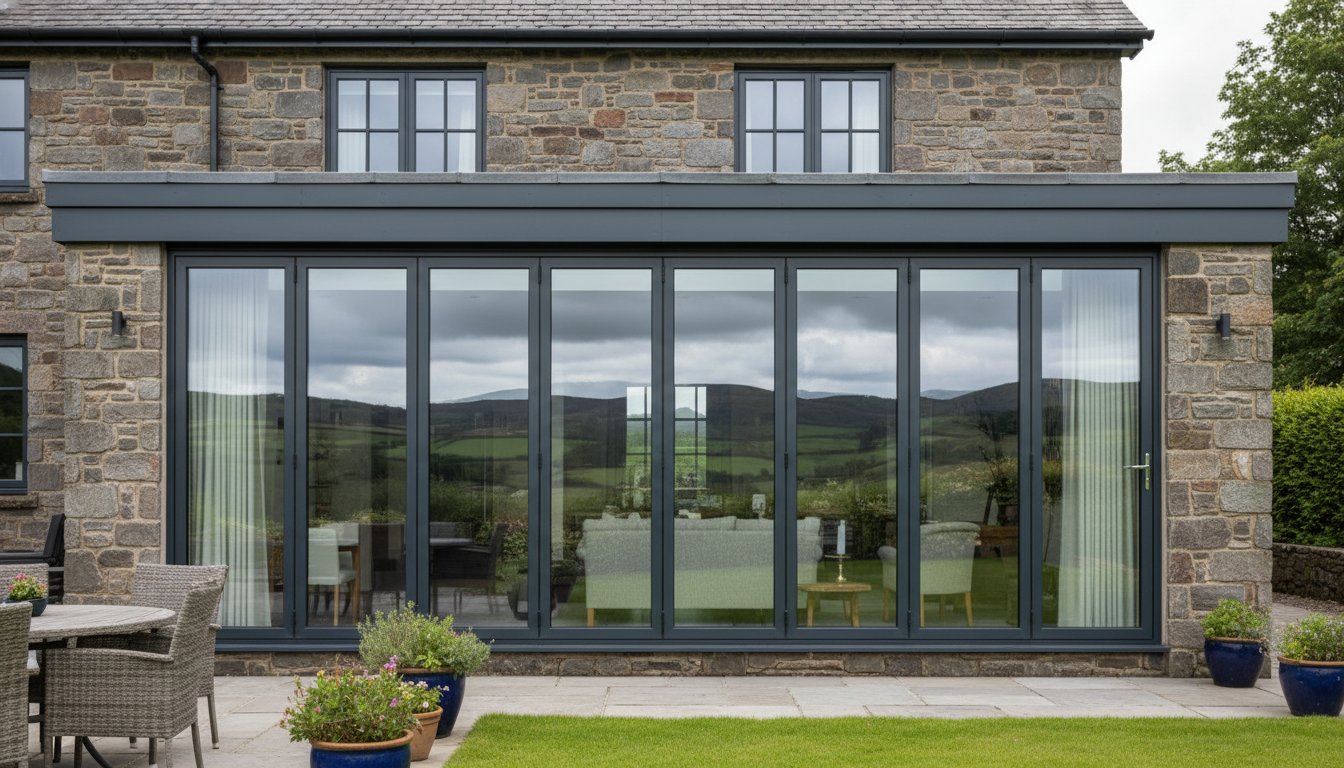
What if the "affordable" alternative to premium glazing actually becomes your most expensive home renovation mistake by 2026? Many homeowners are currently researching aluminium look upvc windows in Doncaster and across the North, attracted by the promise of a sleek, architectural aesthetic at a lower initial cost. You likely want that modern, slimline finish for your property, but you also want the reassurance that your investment will withstand the driving rain and harsh winds that define the Cumbrian landscape. It's a sensible concern, as choosing an imitation material often leads to warped frames or faded foils that ruin your home's kerb appeal within just a few years.
This article explains why residents in Penrith, Carlisle, and the Lake District are increasingly choosing genuine aluminium over uPVC imitations to secure long term value and aesthetic perfection. We'll examine how real aluminium outperforms uPVC in the volatile British weather and why it remains the superior choice for meeting strict local planning regulations in conservation areas. You'll discover how to protect your property from common installation pitfalls whilst achieving a high end architectural look that lasts a lifetime.
Key Takeaways
- Understand why the harsh Cumbrian climate causes dark-foiled uPVC frames to warp and how genuine aluminium offers the thermal stability required for large apertures.
- Compare architectural sightlines to see how real aluminium provides significantly more glass and slimmer frames than even the best aluminium look upvc windows in Doncaster or Carlisle.
- Discover why the Lake District National Park Authority often rejects imitation materials in conservation areas like Keswick and how authentic aluminium secures planning approval.
- Learn the technical differences between durable powder coating and stuck-on plastic foils to ensure your home’s exterior maintains its premium finish without peeling.
- Identify how to avoid "expensive mistakes" by choosing high-specification glazing that prioritises long-term structural integrity over short-term aesthetic trends.
What are Aluminium Look uPVC Windows and Why are They Trending in Cumbria?
Homeowners across Penrith and Carlisle are increasingly moving away from the dated look of chunky white plastic. Aluminium look uPVC windows represent a middle ground. These products use standard uPVC frames that have been modified with flush sashes and smooth grey foils to mimic the sleek, industrial aesthetic of genuine metal. This trend is largely driven by a desire for a high-end look without the associated price tag of premium materials. Whilst they offer a visual upgrade over basic plastic, it's vital to understand the technical differences between these materials before you commit to a full installation.
The primary driver for choosing these imitations is cost. Homeowners researching aluminium look upvc windows in Doncaster or the wider North of England often find that uPVC versions can be 20% to 30% cheaper than real aluminium. However, this saving comes with a trade-off in structural performance and frame thickness. Standard uPVC is bulky and relies on internal multi-chambered profiles for strength, whereas uPVC and aluminium windows differ significantly in their ability to support large glass spans. A smooth 'aluminium-style' foil might look convincing from the kerbside, but the material's behaviour under thermal expansion remains typical of plastic.
The 'Flush Sash' Revolution in Kendal
In Kendal and the surrounding Lake District towns, the 'flush sash' has become the preferred choice for those attempting to recreate the aluminium profile. Unlike a traditional lipped casement that protrudes from the frame, a flush sash sits level with the window face. This creates the flat, minimalist lines seen in modern architecture. Local developers often use these frames to achieve 'the look' on a budget; however, the visual similarity often fades upon closer inspection. From a distance, the flat profile mimics metal, but the welded corner joints of uPVC are a permanent giveaway compared to the precision-mitred joints of real aluminium.
Common RAL Colours for Imitation Frames
The rise of the 'industrial' renovation has seen Anthracite Grey (RAL 7016) dominate the Cumbrian market. This specific shade has become the default choice for homeowners looking to modernise their property. Unlike traditional uPVC which often features a fake woodgrain texture, aluminium-look frames use smooth foils to replicate the powder-coated finish of metal. Foil bonding is a high-temperature lamination process where a durable, coloured film is permanently fused to the uPVC profile to create a specific aesthetic finish. Whilst these foils are resilient, they lack the organic depth and scratch resistance of a genuine powder-coated aluminium surface. If you're weighing up these options for your 2026 project, it's worth seeing the materials side-by-side. You can book a design consultation to compare the tactile reality of these two very different products.
Longevity and Performance: Why uPVC Struggles in the Cumbrian Climate
Cumbria's weather is notoriously unforgiving. While many homeowners search for Aluminium look upvc windows in Doncaster or other regions to find a specific aesthetic, the technical reality of plastic frames often falls short when faced with the Lakeland fells. High-velocity winds and driving rain put immense pressure on window seals. Unlike the relatively sheltered environments of inland towns, a home in Ambleside or Keswick requires a frame that won't bow under atmospheric stress.
Thermal expansion is the primary enemy of the "aluminium look" in uPVC. To achieve that sleek, dark metallic finish, manufacturers apply a foil to the plastic profile. These dark surfaces, often in Anthracite Grey, absorb up to 70% more solar heat than standard white frames. On a rare sunny Cumbrian afternoon, surface temperatures on dark uPVC can exceed 60°C. This heat causes the plastic to expand and contract at a rate that can lead to warping, making windows difficult to lock or open. Aluminium remains structurally stable throughout these temperature swings, ensuring the sash always fits the frame perfectly.
Adhering to the latest UK building regulations for windows is essential for energy efficiency, but material choice dictates how long that performance lasts. While uPVC can meet initial U-value targets, its tendency to shift over time can create micro-gaps that allow heat to escape. Aluminium's rigidity ensures those seals remain airtight for decades, not just seasons.
Structural Integrity and Large Glazing
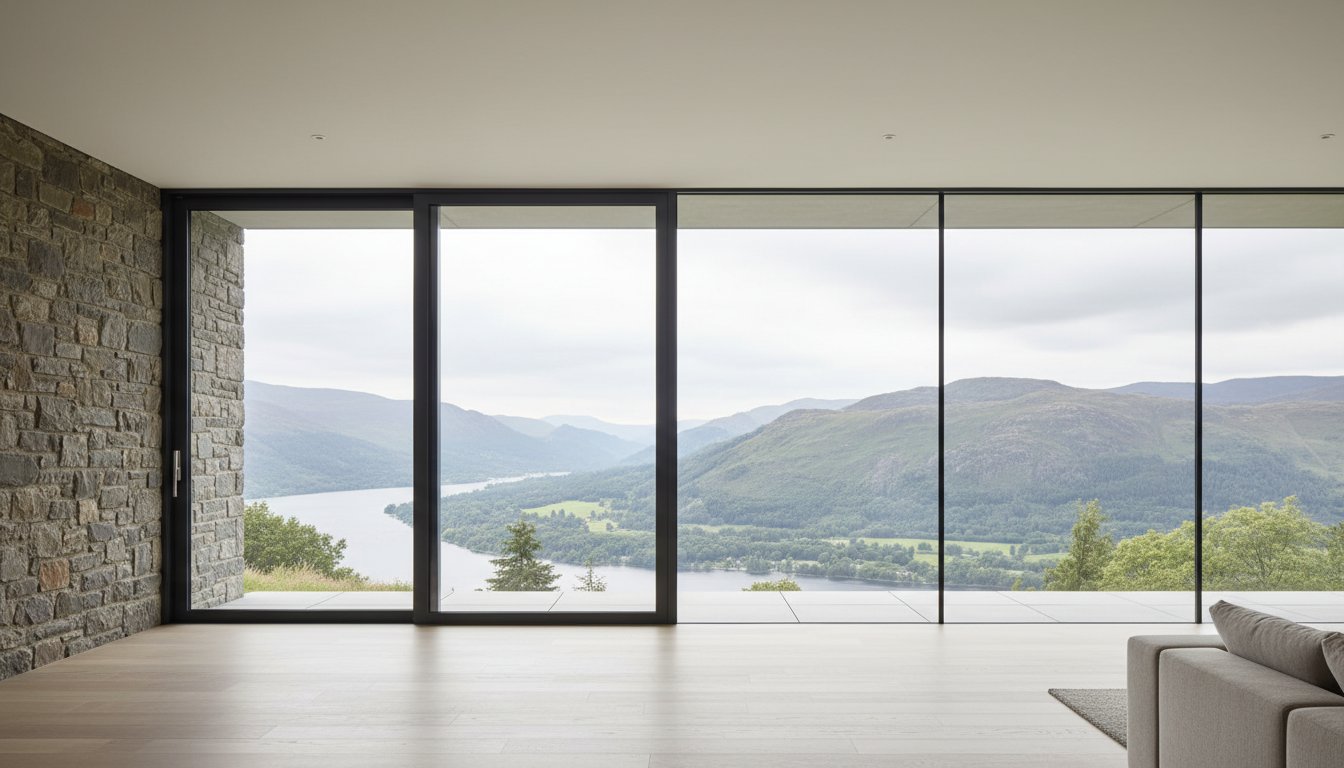
Large picture windows overlooking Windermere or Coniston require immense frame strength. uPVC frames rely on internal steel reinforcements, yet they still lack the inherent stiffness found in narrow aluminium profiles. In high winds, large uPVC units can suffer from "frame bounce." This subtle movement isn't just unsettling; it gradually compromises the weather seal. Aluminium supports heavier triple-glazed units and much larger glass spans. It allows for expansive views without the need for the bulky, thick profiles required to keep a uPVC window stable. If you want a 3-metre wide span of glass, aluminium isn't just the better choice; it's often the only safe one.
The Maintenance Reality Amongst the Lakes
UV exposure is a constant factor in the North West. Over a 12 to 15 year period, the bond between a decorative foil and the underlying uPVC can weaken. This leads to delamination, where the "aluminium look" begins to peel away in unsightly strips. This is one of the "7 Mistakes" we often see homeowners make: prioritising the lower initial cost of Aluminium look upvc windows in Doncaster styles over the 30 year lifecycle value of real metal. Powder-coated aluminium doesn't peel. It's a baked-on finish that resists the high-moisture environment of the Lakes with minimal effort.
- Cleaning requirements: Smooth foils attract static and dust, requiring frequent wiping to maintain their appearance.
- Coastal resilience: For properties near the Solway Firth, salt spray can degrade uPVC hardware faster than marine-grade aluminium finishes.
- Long-term value: Aluminium windows typically retain their operational smoothness twice as long as uPVC alternatives.
If you're beginning to plan your home improvement project, it's often helpful to book a design consultation to compare these materials in person.
Aluminium vs. Aluminium-Look uPVC: The Architectural Comparison
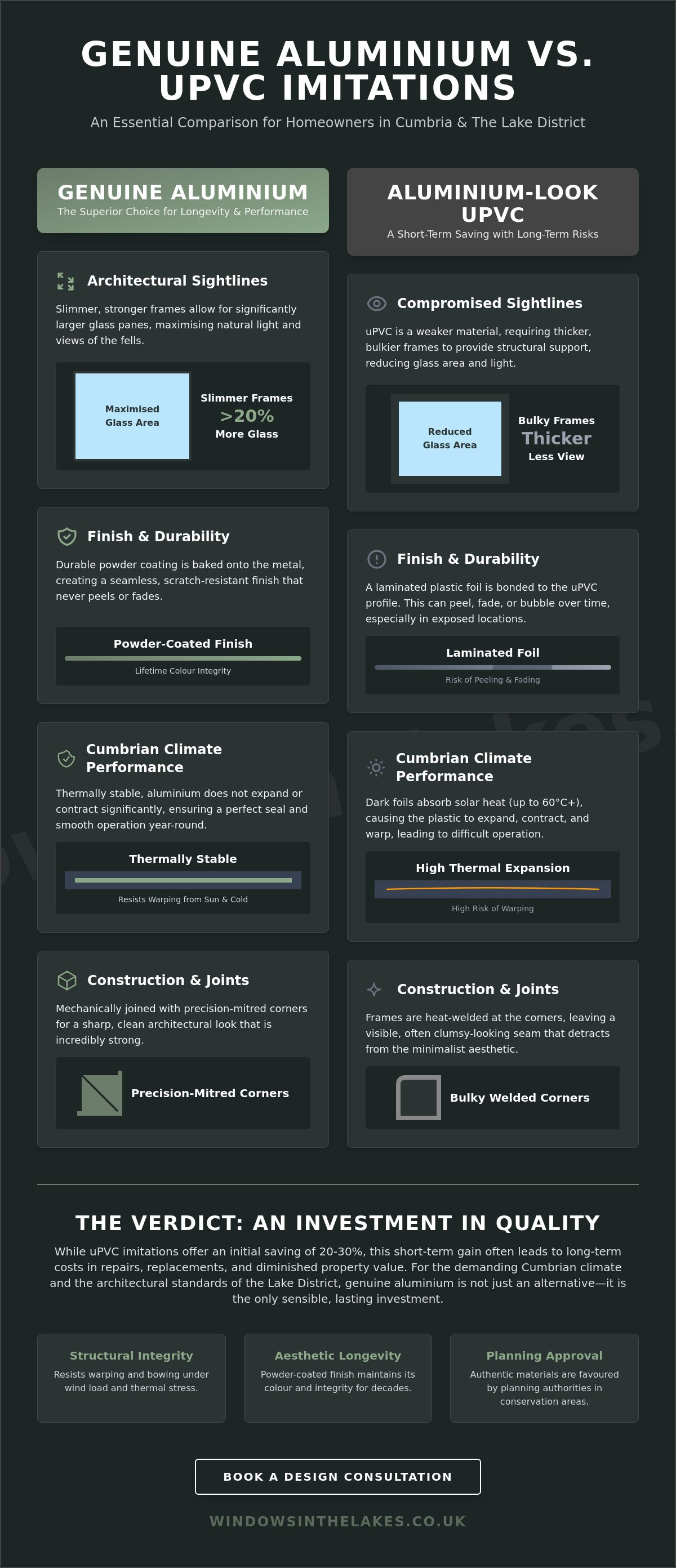
The structural reality of your windows dictates the entire aesthetic of your home. Aluminium isn't just a style choice; it's a material decision that changes how a building breathes and functions. While some homeowners initially search for aluminium look upvc windows in Doncaster or other northern regions to save on costs, the physical properties of metal provide a level of security that plastic cannot match. Aluminium frames are inherently rigid and don't require the internal steel reinforcements that uPVC relies on to prevent warping. This structural integrity allows for larger glass spans and higher wind-load resistance, which is vital for properties exposed to the Cumbrian elements.
From a security perspective, aluminium is the clear leader for 2026. The metal's natural tensile strength makes it incredibly difficult to jemmy or force. While uPVC has improved, it remains a softer material that can be compromised by heat or persistent force. When you choose real aluminium, you're investing in a frame that acts as a structural component of the wall, rather than just a filler for a hole.
Sightlines and Natural Light in Carlisle
The visual difference between these materials is measurable. A standard uPVC sash and frame combination often measures over 120mm in width. In contrast, a slimline aluminium profile can be as narrow as 55mm. This 50% reduction in frame thickness significantly increases the glass surface area. For a home overlooking the Lakeland fells, this means more natural light and fewer obstructions. Even the most advanced aluminium look upvc windows in Doncaster markets suffer from the "bulky corner" issue. These plastic frames are heat-welded together, leaving a visible diagonal seam. Aluminium uses precision-engineered mechanical cleats, creating a seamless, sharp-edged finish that looks modern and intentional.
RAL Colour Consistency and Choice
Choosing aluminium opens a palette of over 200 RAL colours. uPVC is largely limited to a handful of "stuck-on" foils. These plastic films can peel or fade over a 25-year cycle, whereas aluminium undergoes a marine-grade powder coating process. This creates a hard-wearing finish that's fused to the metal. You can achieve a true industrial matt black or a textured anthracite that feels solid to the touch. It's a level of sophistication that plastic cannot replicate. You can view these genuine finishes on our products page to see how they compare to standard alternatives.
- Recyclability: Aluminium is 100% recyclable and 75% of all aluminium ever produced is still in use today.
- Life Cycle: Expect a 45-year lifespan for aluminium, compared to 25-30 years for most uPVC products.
- Maintenance: Powder-coated metal requires only a simple wipe-down, whereas white uPVC can yellow or stain over time.
Planning Permission and Conservation in the Lake District
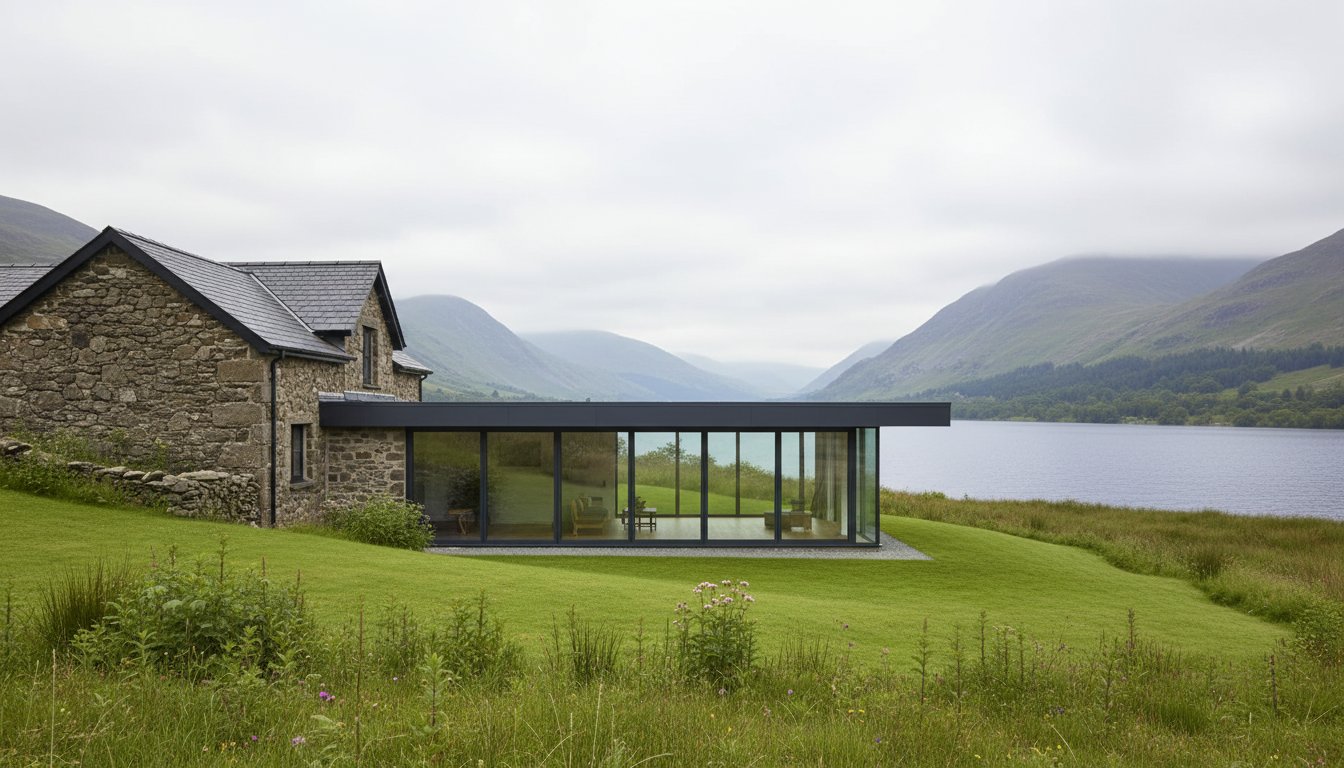
The Lake District National Park Authority (LDNPA) maintains some of the most rigorous glazing standards in the UK. If you're renovating a property in Keswick or Ambleside, you'll likely find that standard uPVC frames are a non-starter. Planners prioritize the preservation of the "Cumbrian character," which often excludes modern plastics. While some homeowners initially search for Aluminium look upvc windows in Doncaster to find budget alternatives, these imitation products rarely pass the visual inspection required for a Grade II listed building or a property within a designated conservation area.
Conservation Area Requirements
Historic Cumbrian towns require "like-for-like" replacements. This doesn't just mean the colour; it refers to the physical depth and profile of the frame. Aluminium's inherent strength allows for incredibly slim profiles that mimic Victorian timber or steel. In a 2023 planning appeal, the inspector noted that material authenticity is a decisive factor in maintaining the architectural integrity of a streetscape. This is why imitation materials are frequently rejected. They lack the crisp, sharp edges found in genuine metal frames. When you choose aluminium, you're choosing a material that planners respect for its longevity and structural honesty.
- Aluminium frames offer a 30% slimmer profile than even the "slimline" uPVC variants.
- Matte powder-coated finishes eliminate the "plastic sheen" that often triggers planning refusals.
- Authentic Georgian bar details are more convincing on metal than on plastic substrates.
The Heritage Aesthetic in Windermere
For properties in Windermere, matching historic steel window sightlines is essential. Modern aluminium "Crittall-style" windows provide the narrowest sightlines on the market, often measuring just 30mm. In contrast, uPVC heritage ranges usually fail the authenticity test because their frames are too bulky. They can't replicate the delicate proportions of original 19th-century glazing. You can see how we've successfully navigated these requirements in our featured projects, where aluminium was the only viable choice for planners. Even if you've looked at Aluminium look upvc windows in Doncaster as a reference point, the reality of Lake District planning demands the real thing.
In a 2022 project near Grasmere, a homeowner's application for high-end uPVC was denied because the chunky frames clashed with the local slate masonry. We stepped in with a slimline aluminium solution that secured approval within six weeks. The planners specifically cited the matte finish and structural slimness as the reasons for the turnaround. Don't risk a costly rejection by opting for materials that don't belong in a National Park.
If you're worried about navigating planning hurdles, book a design consultation to see our LDNPA-compliant range.
Why Windows in the Lakes Focuses Exclusively on Genuine Aluminium
We've built our reputation on 35 years of glazing expertise across the North West. Over those three decades, we've watched the industry evolve, but our commitment to quality has remained fixed. We refuse to supply uPVC products because we're dedicated to protecting our customers from expensive mistakes. While some homeowners might search for aluminium look upvc windows in Doncaster or other parts of the UK to find a cheaper alternative, these imitation products often fall short of the 40-year lifespan that genuine aluminium offers. In the harsh, damp climate of Cumbria, the structural integrity of your frames isn't just an aesthetic choice; it's a necessity for the longevity of your home.
Our "Supply, Survey & Full Installation" process is designed specifically for Cumbrian homeowners who value precision. We don't believe in cutting corners with "uPVC-wrapped" alternatives that can expand up to 2.5mm per metre in direct sunlight, leading to sticking sashes and air leaks. Instead, we organise every project to ensure architectural perfection. By focusing on genuine aluminium, we provide frames that are inherently stronger, slimmer, and more thermally efficient than any plastic counterpart could ever hope to be.
The Expert Consultant Approach
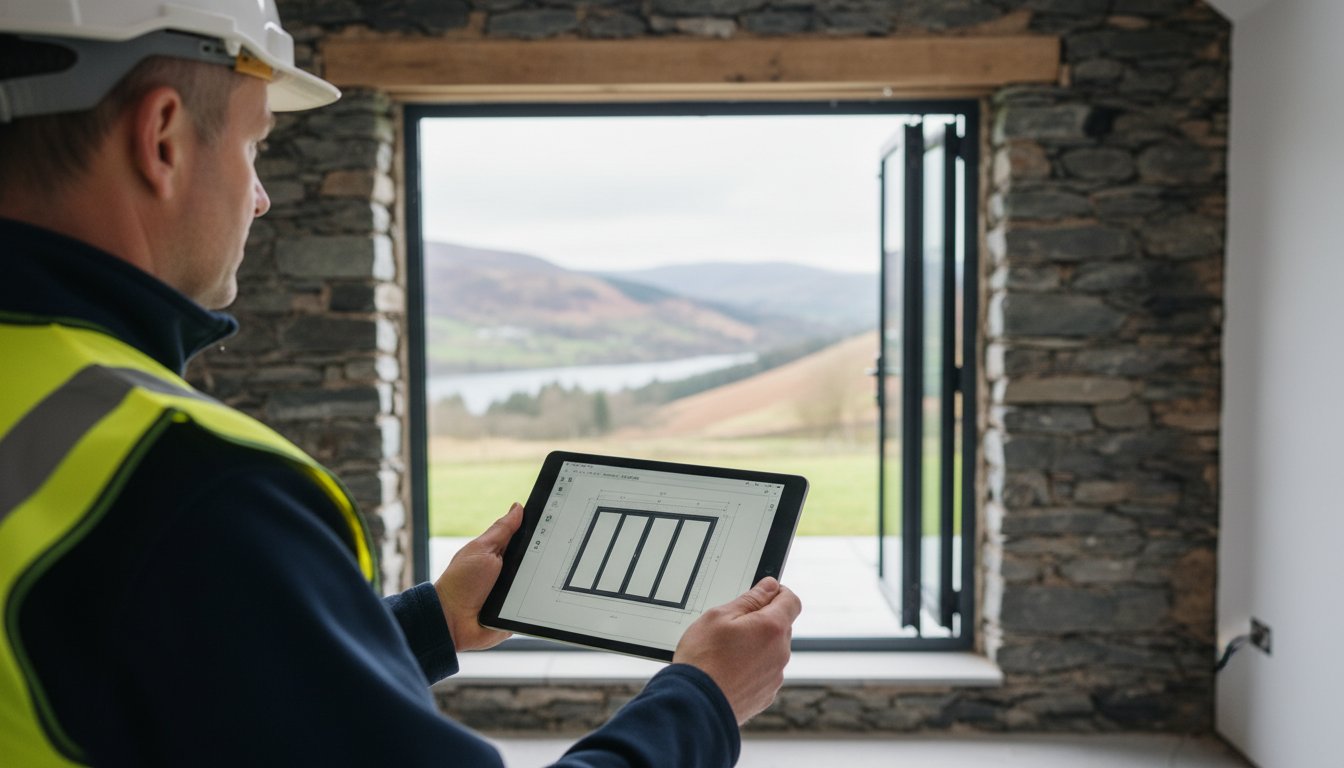
We don't view ourselves as simple window fitters. We act as your project partners from the moment you first get in touch. Our focus is entirely on high-specification, architectural-grade glazing that enhances the structural value of your property. We take the time to explain the engineering behind our slimline profiles, ensuring you understand why real metal outperforms plastic imitations. If you're ready to elevate your home's design, you can book a design consultation with our team to explore the possibilities for your specific site.
Starting the Conversation for Your Home
Whether your property is in Penrith, Kendal, or the heart of the Lake District, our no-obligation survey is the first step toward a transformed home. During this visit, we don't just measure openings; we specify the right aluminium system for your specific property type and its exposure to the elements. We've seen how products marketed as aluminium look upvc windows in Doncaster and similar regions struggle with the wind loads of the North West. We'll show you why a dedicated aluminium system is the only logical choice for a 2026 renovation. Start the conversation today to secure your installation slot and ensure your home benefits from the highest professional standards in the industry.
Secure the Future of Your Cumbrian Home
Choosing the right glazing is a decision that impacts your property's value and comfort for decades. Whilst Aluminium look upvc windows in Doncaster might offer a temporary visual fix in less demanding environments, they can't match the structural performance or slimline profiles of genuine aluminium in the Lake District. Our 35 years of industry experience shows that uPVC often struggles with the coastal winds and temperature fluctuations specific to Cumbria, leading to warped frames and compromised seals over time.
As specialists in Lake District National Park installations, we focus exclusively on Red Dot style architectural glazing to ensure your project meets strict local planning requirements. We've spent over three decades helping homeowners avoid expensive mistakes by prioritising materials that offer genuine longevity. Investing in real aluminium isn't just about modern aesthetics; it's about choosing a material that's engineered to endure the British elements without fading or failing. By selecting a specialist partner, you ensure your home maintains its architectural integrity well beyond 2026.
Our team is ready to provide the professional guidance you need for a seamless, high-specification installation. Start the conversation about your aluminium project today and ensure your home remains a beautiful, high-performance sanctuary for years to come.
Frequently Asked Questions
Can you really tell the difference between aluminium and aluminium-look uPVC?
Yes, the visual difference is significant because of the frame thickness and how the corners are joined. Real aluminium profiles are typically 50% slimmer than uPVC alternatives, allowing for more glass and less frame. While foils attempt to mimic the colour, uPVC frames require bulky 45-degree welded joints. Aluminium uses precision-engineered mechanical joints that create a sleek, flush finish that plastic cannot replicate.
Is aluminium-look uPVC cheaper than real aluminium windows in Doncaster or Cumbria?
While the initial purchase price for aluminium look upvc windows in Doncaster or Cumbria is often 20% to 30% lower, the long-term value tells a different story. Real aluminium windows typically last 45 years according to industry standards, whereas uPVC lifespans are often cited at 20 to 25 years. When you factor in the 2.5 times higher strength-to-weight ratio of aluminium, the investment protects your property's resale value more effectively.
Do uPVC windows warp more than aluminium in the Lake District?
Yes, uPVC has a much higher thermal expansion coefficient, meaning it expands and contracts significantly more during temperature shifts. In the Lake District, where weather can change rapidly, dark-coloured uPVC frames can reach surface temperatures of 70 degrees Celsius in direct sun. This causes the frames to bow or warp over time. Aluminium remains structurally stable across all Cumbrian weather conditions and won't twist or stick in its frame.
Are aluminium windows allowed in Lake District conservation areas?
Aluminium windows are frequently approved for use in the Lake District National Park's 26 conservation areas, especially when replacing non-original windows. The slim profiles and heritage-style options often satisfy planning officers who prioritise the preservation of a building's original sightlines. We always recommend checking with the Lake District National Park Authority (LDNPA) before starting your project to ensure the specific RAL colour meets their local guidelines.
How long do the foils on aluminium-look uPVC windows actually last?
Most manufacturers provide a 10-year guarantee on foils, but they can begin to show signs of delamination or fading after 12 to 15 years. Unlike powder-coated aluminium, which is fused to the metal at 200 degrees Celsius, a foil is essentially a stuck-on skin. In high-exposure areas like the Cumbrian coast, salt spray and UV rays can cause these foils to peel at the edges much sooner than a professional aluminium finish.
Which material is better for large bifolding or sliding doors?
Aluminium is the only viable choice for oversized glazing because it's significantly stronger than plastic. A standard aluminium bifold leaf can support glass weights exceeding 100kg without the frame sagging. If you attempt to use uPVC for large openings, the frames must be much thicker to hold the glass. This blocks your view and increases the risk of the doors sticking or failing to lock correctly over time.
What is the best RAL colour for a modern look in Carlisle?
Anthracite Grey (RAL 7016) remains the most popular choice for modern renovations in Carlisle, accounting for approximately 60% of our contemporary installations. For those seeking a softer look that still feels modern, Agate Grey (RAL 7038) is an excellent alternative. These architectural finishes provide a sleek, matte appearance that complements both traditional Cumbrian stone and modern render perfectly.
Why doesn't Windows in the Lakes offer uPVC options?
We focus exclusively on aluminium to ensure our customers avoid the common expensive mistakes associated with cheaper, less durable materials. By specialising in high-specification aluminium, we provide products that offer superior security, better thermal efficiency, and a lifespan that outlasts uPVC by decades. Our commitment to the Cumbrian landscape means we only install materials that stand up to the local climate while enhancing the architectural beauty of your home.