
What if the single biggest risk to your home renovation isn't the choice of frame, but a measurement error hidden in plain sight? Many homeowners in Cumbria naturally assume that a standard mortgage valuation or a quick site visit covers the technical requirements for new glazing. It's understandable to feel anxious about whether bespoke, slimline aluminium windows will truly withstand a Lake District winter or satisfy local conservation officers. We believe you deserve total transparency before the first brick is touched.
In this guide, we'll demonstrate exactly what a professional survey looks like when specified to the highest technical standards. You'll discover the critical differences between a general house survey and the specialist precision required for premium aluminium products. We'll walk you through our meticulous checklist, from structural openings to heritage-style aesthetics. This ensures your bespoke windows fit perfectly whilst respecting the unique architectural character of our region. By the end, you'll have the confidence to move forward with your project, knowing every detail has been carefully specified to avoid expensive mistakes.
Key Takeaways
- Learn the vital distinctions between general RICS home surveys and the specialist technical inspections required for high-specification aluminium glazing.
- Discover exactly what a professional survey looks like by focusing on structural integrity and the precise "plumbness" needed for seamless bifolding door operation.
- Understand how to protect your home from the Cumbrian climate by calculating specific wind loads and architectural requirements for exposed Lakeland locations.
- Identify the critical red flags of a "quick" survey that often lead to leaking windows or sticking doors, ensuring your long-term investment is protected.
- Explore our educator-led "Supply, Survey & Full Installation" process designed to provide transparency and expert guidance throughout your renovation.
Understanding the Tiers: RICS Surveys vs. Technical Glazing Surveys
A professional survey is a comprehensive, forensic inspection of a property's physical condition or specific technical requirements. It moves far beyond a simple walk-through; it's a critical safeguard designed to identify hidden risks before you commit to a purchase or a high-end renovation. For homeowners in Cumbria, understanding what a professional survey looks like starts with distinguishing between general building assessments and the precision-led technical surveys required for modern glazing installations.
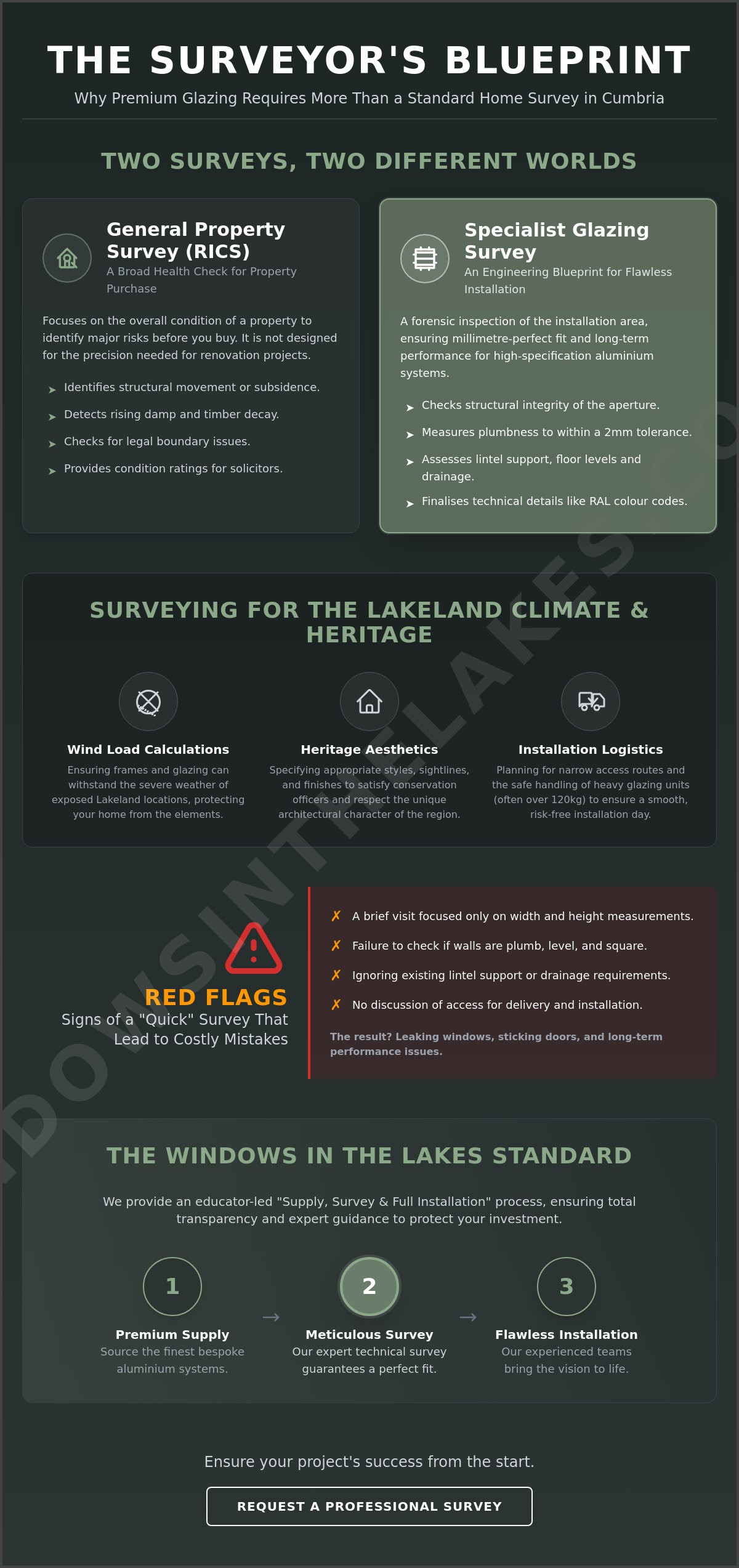
Most property buyers interact with Chartered surveyors in the United Kingdom during the acquisition phase. These professionals provide three distinct RICS levels. Level 1 is a basic condition report using a traffic light system. Level 2, the Home Survey, is the standard for modern homes in towns like Kendal or Penrith. Level 3 is a full Building Survey, essential for the Lake District's older stone-built period properties. It's a common mistake to confuse these with a mortgage valuation. A valuation is a brief check for the lender's benefit; it doesn't protect you and won't highlight a failing roof or a blown glazing unit.
The Purpose of a General Property Survey
In the unique Cumbrian climate, where some areas experience over 2,000mm of annual rainfall, a general survey focuses on weather-related degradation. The surveyor looks for specific regional issues:
- Identifying structural movement or subsidence in properties built on undulating Lakeland terrain.
- Detecting rising and penetrating damp, which is frequent in solid-wall Victorian terraces.
- Locating timber decay or wet rot in floor joists and roof timbers.
- Flagging legal boundary discrepancies or lack of building regulations for previous extensions.
This process provides a condition rating for every visible element, giving your solicitor a roadmap for further enquiries before you exchange contracts.
The Purpose of a Specialist Glazing Survey
When you're upgrading to premium aluminium systems, the requirements shift from general condition to millimetre-precise engineering. This is what a professional survey looks like in the context of high-performance architecture. We don't just measure the gap; we assess the structural integrity of the entire opening.
A technical surveyor focuses on the feasibility of the installation. If you're planning to install bespoke double french doors, the survey must account for floor levels, drainage paths, and whether the existing lintel can support the weight of high-specification glass. This stage is where we finalise technical details such as RAL colour codes, handle finishes, and thermal performance targets. It ensures that when your frames arrive from the factory, they fit perfectly the first time, avoiding the delays and "expensive mistakes" that plague amateur installations.
What a Professional Surveyor Looks for During the Visit
A professional survey is the bridge between a design concept and a flawless installation. It's where technical precision meets the reality of Cumbrian architecture. When you see what a professional survey looks like, you'll notice the surveyor spends more time examining the structure than simply holding a tape measure. They assess the structural integrity of the aperture, looking for signs that the masonry can support the weight of premium aluminium frames. In older Lakeland properties, stonework can shift over decades. Our surveyors check that openings are perfectly plumb; a bifold door requires tolerances as tight as 2mm to operate without catching or dragging over time.
While general guidelines like the RICS Home Survey standards provide a broad framework for property health, a specialist glazing survey focuses on the minute details of the installation environment. This includes logistical planning for our installation teams. Rural Lake District locations often present narrow access routes or steep inclines that require specific lifting equipment for glazing units that can exceed 120kg. We map out the path from the delivery vehicle to the aperture to ensure a safe, efficient fitting day.
Exterior Inspection Checklist
- Masonry Condition: We look for "blown" brickwork or crumbling Lakeland stone. These issues compromise the fixings used to secure your new doors and may require remedial work before the installation begins.
- Drainage and Cills: We assess the requirement for sub-cills to ensure water sheds away from the property. This prevents damp ingress, especially in areas exposed to high Cumbrian rainfall.
- External Obstructions: Low-hanging eaves, external pipework, or even security lighting can interfere with the frame height. We identify these early to avoid onsite delays.
Interior Technical Assessment
Understanding what a professional survey looks like also involves a deep dive into your home's interior. We measure internal floor levels at multiple points across the opening. This is vital if you want a "flush track" transition where the internal floor meets the external patio seamlessly. We also identify internal obstructions like radiators, curtains, or bespoke kitchen units that might prevent bifold leaves from stacking correctly. Finally, we evaluate the condition of internal reveals. Older plasterwork can be brittle; we plan the removal of your old windows to minimise damage to your existing decor.
If you're ready to move beyond guesswork and secure a technical evaluation of your home, you can start the conversation with our technical team to ensure your project begins on a solid foundation.
Cumbrian Specifics: Surveying for the Lakeland Climate and Heritage
Standard UK surveying practices often fall short in the rugged Cumbrian landscape. A surveyor working in a sheltered urban environment doesn't have to account for the relentless driving rain of Keswick or the sub-zero winters of Alston, but our team does. What a professional survey looks like in this region is a process of technical adaptation. It's about ensuring your home remains a sanctuary, even when the fells are at their most unforgiving. We treat every property as a unique micro-climate, adjusting specifications based on altitude and exposure.
Wind Load and Weatherproofing Analysis
Surveyors must calculate precise wind loads for large-scale architectural glazing. This isn't guesswork; it involves analysing the property's altitude and its proximity to open fells. For a home perched on a hillside, we determine the exact glass thickness and frame reinforcement needed to prevent deflection during a storm. An exposure rating is a critical metric for Cumbrian glazing that measures a building's vulnerability to wind-driven rain and air pressure based on its geographical location. We also assess the property's specific orientation to specify the correct drainage systems and high-performance seals. Without these local calibrations, even premium aluminium frames can fail under extreme pressure.
Heritage and Conservation Considerations
Navigating the Lake District National Park's aesthetic requirements is a core part of our survey process. In towns like Kendal or Windermere, the visual impact of new windows is heavily scrutinised by planning officers. We specialise in "Crittall-style" heritage windows for traditional stone cottages, ensuring the slimline aluminium profiles mimic original steel frames without compromising on warmth. Sightlines are vital. We measure frame profiles to ensure they match the architectural character of the street perfectly. You can see how we've balanced modern performance with traditional aesthetics in our featured projects.
Ensuring thermal efficiency standards are met for homes in colder, high-altitude regions is a non-negotiable step. We specify glazing units with low U-values that exceed standard building regulations, providing a thermal barrier that keeps heat in when the temperature drops. This level of detail is exactly What a professional survey looks like when conducted by a local specialist who understands the demands of the Lakeland climate. We don't just measure the opening; we survey the environment to protect your investment for decades.
Identifying Red Flags: What a Poor Survey Looks Like
A survey that lasts ten minutes isn't a survey; it's a guess. In the glazing industry, approximately 15% of all installation failures stem directly from inadequate initial measurements. If a surveyor arrives at your home with nothing more than a basic tape measure and fails to check for level or plumb, you're looking at a major red flag. This lack of detail often leads to "expensive mistakes" that only become apparent once the products arrive on site.
Poorly executed surveys often miss critical structural issues. You might find that your new bifold doors stick after just three months or that windows leak during a heavy Cumbrian downpour because the frame doesn't sit square in the aperture. A lack of transparency regarding what's included in the final report is another warning sign. If you don't receive a clear breakdown of the technical specifications, you're essentially flying blind. Professionalism in this industry relies on meticulous data collection, not just a quick glance at a brick opening.
Common Surveying Mistakes to Avoid
Many homeowners fall victim to the "7 mistakes" framework, where shortcuts during the site visit lead to total project failure. One of the most frequent errors involves ignoring the floor datum. If a surveyor fails to accurately calculate the finished floor level, your new bifold doors might not open over your chosen carpet or internal tiles. It's a common oversight that can cost upwards of £1,000 to rectify after the fact.
- Neglecting Lintel Capacity: Failing to assess the weight-bearing capacity of existing lintels can cause structural sagging, especially in older Lake District properties.
- Ignoring Drainage: A poor survey overlooks where water will run, leading to pooling around the base of your new frames.
- Inaccurate Aperture Checks: Relying on a single measurement rather than checking for "out-of-square" walls leads to unsightly gaps.
The Professional Alternative
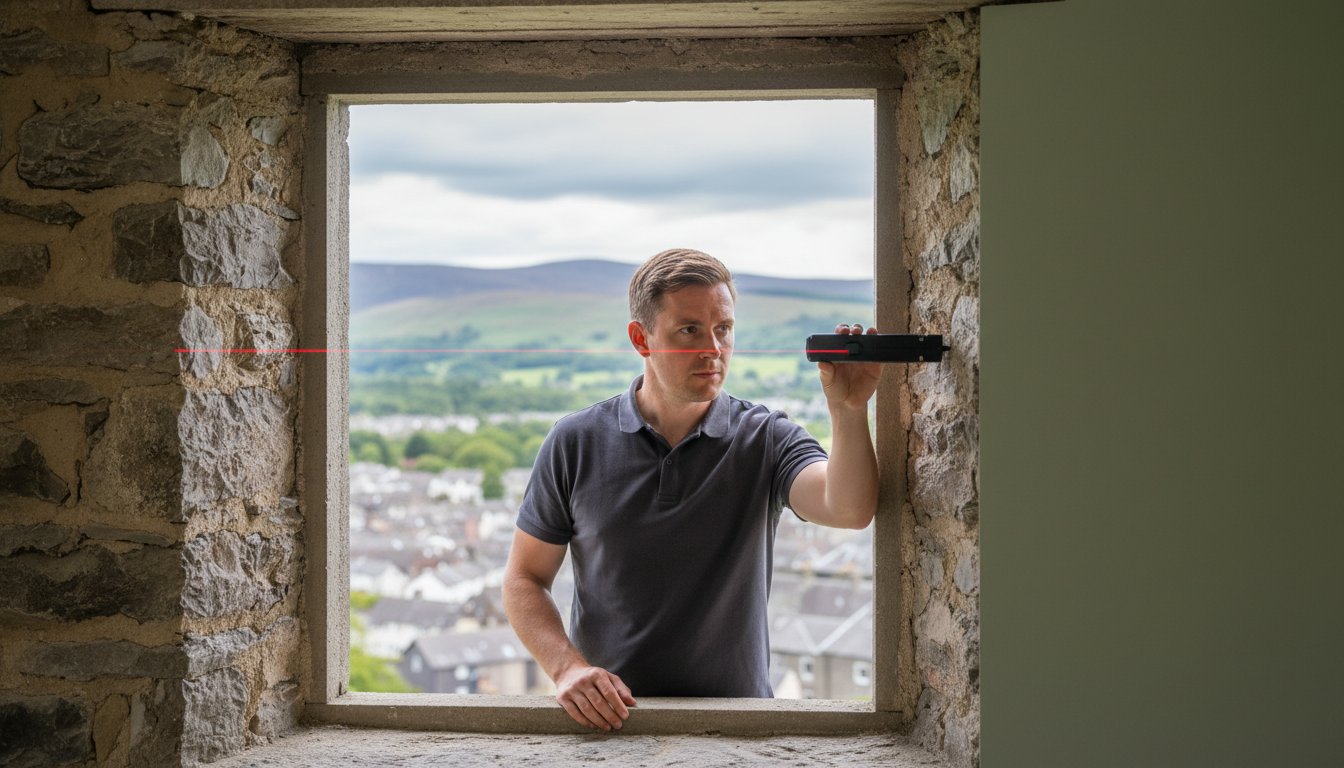
Understanding what a professional survey looks like helps you distinguish a "safe pair of hands" from a risky contractor. A high-specification survey utilises laser levels and digital measuring tools for absolute precision. This ensures every millimetre is accounted for before your bespoke aluminium frames are manufactured. You should always receive a detailed "Survey Confirmation" document to sign off, ensuring you're happy with every technical detail.
This process protects your investment and guarantees that the installation team has everything they need for a seamless fit. To ensure your project starts with this level of accuracy, we always encourage homeowners to book a design consultation before the final technical survey takes place. This allows us to align your aesthetic goals with the structural requirements of your home.
Ready to ensure your home renovation is handled with precision? Request a quote today to start your project with a team that values technical excellence.
The Windows in the Lakes Survey Standard
At Windows in the Lakes, we don't just measure apertures; we provide a consultancy service. Our educator-first approach ensures you understand the technical "why" behind every specification we recommend. Whether you're selecting slimline frames for a period cottage in Penrith or high-performance glazing for a modern renovation in Carlisle, we want you to feel confident in your choices. We believe that a survey is the most critical stage of any home improvement project. It's the moment where we translate your aesthetic vision into a technical reality that works for the unique climate of the Lake District.
The transition from your initial enquiry to our comprehensive "Supply, Survey & Full Installation" process is designed to eliminate risk. Many homeowners worry about the "expensive mistakes" often associated with generic glazing firms, such as poor drainage or incorrect thermal ratings. Our local expertise protects your investment by identifying these issues before they occur. By the time we finalise the technical blueprint, every detail is ready for our specialist aluminium manufacturers to execute with millimetre precision.
Our Step-by-Step Professional Process
A professional survey is far more than a simple site visit. It's a three-stage technical audit that ensures your new aluminium windows or bifold doors perform exactly as intended for decades. Here is how we manage that process:
- Initial Site Visit: We meet at your property to discuss aesthetics and functional requirements. We look at structural openings, floor levels, and how the light interacts with your space.
- Formal Technical Survey: This is what a professional survey looks like in practice. Our experienced aluminium glazing specialist conducts a rigorous assessment of tolerances, wind loads, and thermal requirements specific to your Cumbrian location.
- CAD Drawings and Approval: We produce final CAD drawings and technical specifications for your sign-off. This ensures you see exactly what will be manufactured before the first piece of aluminium is cut.
Starting the Conversation
We focus exclusively on premium aluminium rather than uPVC or DIY kits. Aluminium provides the structural integrity required for the large, slimline glass spans that define modern architecture in the North West. Unlike generalist suppliers, we don't believe in a one-size-fits-all approach. Our commitment to surveying excellence is reflected in our case studies, where we've delivered high-specification projects across the county.
When you choose a specialist, you're choosing a "safe pair of hands" for your home. We've spent years refining our process to ensure that what a professional survey looks like for our clients is a stress-free, expert-led experience. If you're ready to upgrade your property with precision-engineered glazing, the next step is simple. You can request a professional quote for your Cumbria project today and let us help you build a blueprint for a better home.
Protect Your Investment With Lakeland Expertise
Investing in high-performance glazing is a significant decision for any property owner in Cumbria. You've now seen that a standard homebuyer's report simply won't suffice when it comes to complex technical window specifications. A true technical survey must account for the unique heritage requirements of the Lake District National Park and the intense weather patterns of the fells. Understanding what a professional survey looks like ensures you avoid the common pitfalls of poor drainage or structural misalignment that often plague lesser installations.
With over 35 years of industry experience, we specialise in navigating these specific local complexities. We focus exclusively on high-performance aluminium to provide the durability and slimline aesthetic your home deserves. Our meticulous process removes the guesswork, protecting you from expensive mistakes whilst ensuring your installation meets the highest professional standards. We're here to act as your consultant, ensuring every millimetre is accounted for before a single frame is manufactured. Don't leave your project to chance when specialist local knowledge is just a click away.
Start the conversation about your premium glazing project today and let's ensure your home remains a weather-tight, beautiful sanctuary for years to come.
Frequently Asked Questions
Is a professional survey the same as a mortgage valuation?
No, a professional technical survey is entirely different from a mortgage valuation. A valuation confirms the property value for a lender, whereas a technical survey focuses on millimetre-precise measurements for manufacturing. Our surveyors examine the structural integrity of apertures and specific thermal requirements. This ensures your high-quality aluminium frames fit perfectly. Understanding what a professional survey looks like helps you avoid the 15% of installations that fail due to poor initial measurements.
How long does a technical glazing survey usually take?
A standard technical survey for a three-bedroom home typically takes between 2 and 3 hours. Larger projects in the Lake District featuring complex bifolding doors or heritage-style glazing may require up to 5 hours of onsite time. We don't rush this process. Meticulous data collection at this stage prevents delays during the installation phase, ensuring every slimline frame aligns with your home's unique architecture.
Do I need to be present whilst the surveyor is at my property?
We strongly recommend you're present during the survey to discuss specific design preferences and functional requirements. While we can access the exterior independently, we need internal access to check floor levels and wall thicknesses. Being there allows us to start the conversation about technical details like threshold heights for bifolds. This collaborative approach ensures the final specification meets your expectations without any mid-project surprises.
What happens if the surveyor finds a structural problem with my window openings?
If we identify structural issues like failing lintels or damp, we'll provide a clear report detailing the necessary remedial work. We won't install new glazing into an unstable opening as this risks your long-term investment. You'll need to organise a builder to rectify these points before we proceed. This transparency is a core part of what a professional survey looks like, protecting you from expensive mistakes later.
Can a survey be carried out before I have my planning permission in the Lake District?
You can certainly book a preliminary survey before planning permission is granted, but final manufacturing measurements must wait until the Lake District National Park Authority approves your plans. Since 2023, planning stipulations for local heritage properties have become more rigorous. A survey helps align your design with these requirements early on. We'll ensure your chosen aluminium profiles meet the specific aesthetic standards required for your Cumbrian location.
How much does a professional technical survey cost for a full house of windows?
Most reputable Cumbrian installers include the technical survey as part of a full supply and installation contract. If requested as a standalone service, industry rates for a comprehensive glazing survey typically range from £250 to £500 depending on the property size. We provide this as a transparent, no-obligation part of our professional standards. This ensures your project starts with the precision required for high-end aluminium installations.
What tools should a professional surveyor be using in my home?
A professional surveyor uses high-precision tools including 3D laser scanners, digital callipers, and moisture meters. We don't rely on simple tape measures for complex aluminium projects. These tools allow us to detect structural shifts or uneven apertures that aren't visible to the naked eye. Using calibrated equipment ensures that slimline frames or large-scale bifolds operate smoothly for decades, rather than failing after a single season.
Will the surveyor check for asbestos or other hazardous materials?
Our surveyors perform a visual risk assessment for potential hazardous materials like asbestos in old soffits or mastic. However, a glazing survey isn't a substitute for a dedicated Refurbishment and Demolition asbestos survey. If we suspect hazardous materials are present in a property built before 2000, we'll advise you to seek a specialist report. This protective approach ensures the safety of both your family and our installation team.