Why do we invest in a Lake District home only to spend most of the year hidden behind thick stone walls, cut off from the very fells we love? It's a common frustration for many Cumbrian homeowners. You want to enjoy the changing seasons, but the reality of 200 days of rainfall each year often makes your patio feel like a no-go zone. You might worry that adding structures like glass rooms will either fail against the Atlantic winds or fall foul of strict National Park planning restrictions.
We understand these concerns because we live and work here too. This guide will show you how a bespoke aluminium glass room provides a high-performance, maintenance-free solution that stands up to our unique climate whilst framing those uninterrupted views of your garden. We'll explore the technical specifications needed for year-round thermal comfort, the importance of slimline profiles, and how to ensure your architectural glazing adds genuine value to your property. By the end of this article, you'll know exactly how to create a seamless indoor-outdoor lifestyle that works as well in January as it does in June.
Key Takeaways
- Understand the architectural distinction between traditional conservatories and bespoke Glass Rooms, and how these aluminium structures can significantly enhance your property’s market value.
- Gain clarity on Lake District National Park Authority (LDNPA) planning regulations to determine whether your project qualifies as permitted development or requires a full application.
- Explore the specialist engineering required for Cumbrian weatherproofing, focusing on wind load safety and durable materials designed to endure the exposed conditions of the fells.
- Learn practical strategies for integrating heating and lighting to transform your extension into a versatile, year-round living space that connects you with the landscape.
- Discover how a professional "Supply, Survey & Full Installation" process protects you from expensive mistakes whilst ensuring a high-specification finish for your home renovation.
What is a Glass Room? Defining the Modern Architectural Extension
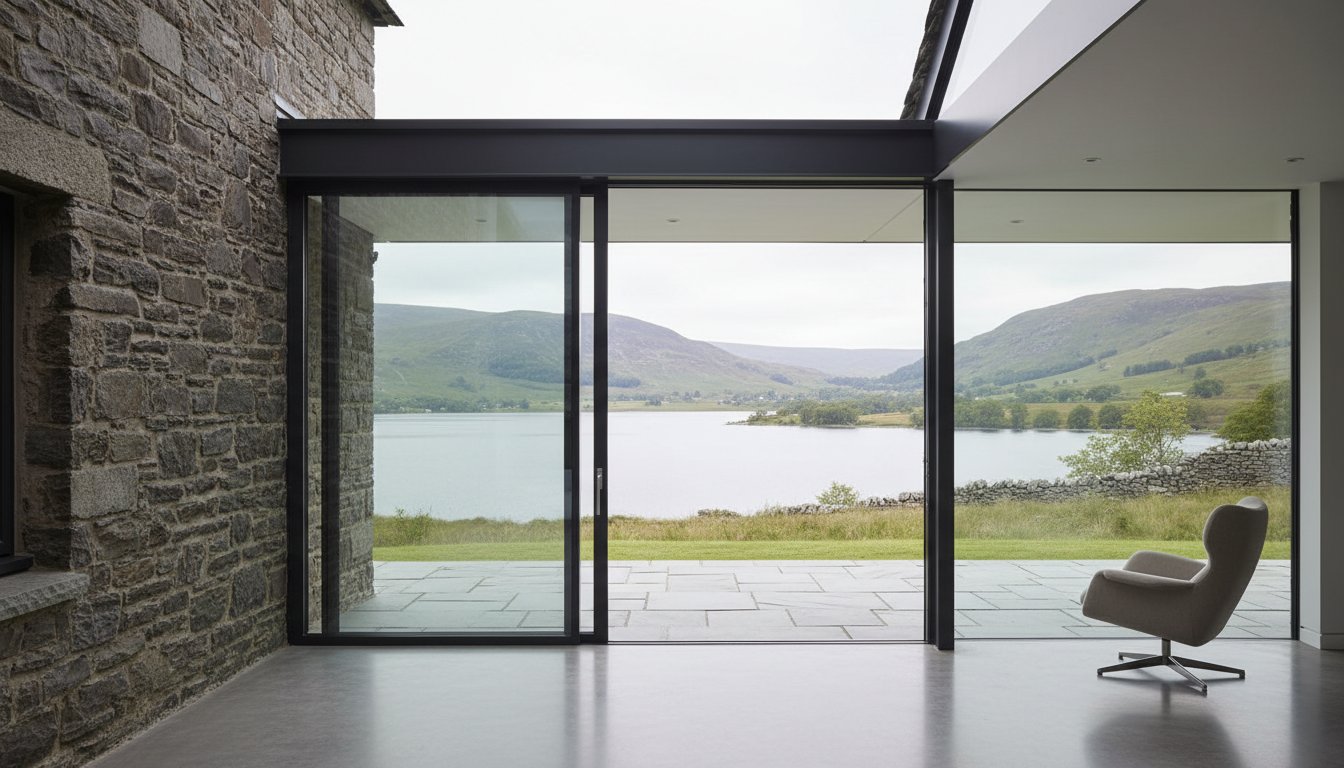
A glass room represents a distinct shift in how Cumbrian homeowners interact with their gardens. It isn't a traditional extension. Instead, it's a non-thermally broken aluminium structure designed to enhance outdoor living. By using high-performance architectural glass, these spaces create a transparent sanctuary that remains open to the landscape whilst providing shelter from the elements. This minimalist approach suits the local topography perfectly. Whether you're looking out over the fells or a manicured garden in Cartmel, frameless glass ensures your view remains entirely uninterrupted.
Glass Room vs. Conservatory: Which is Right for You?
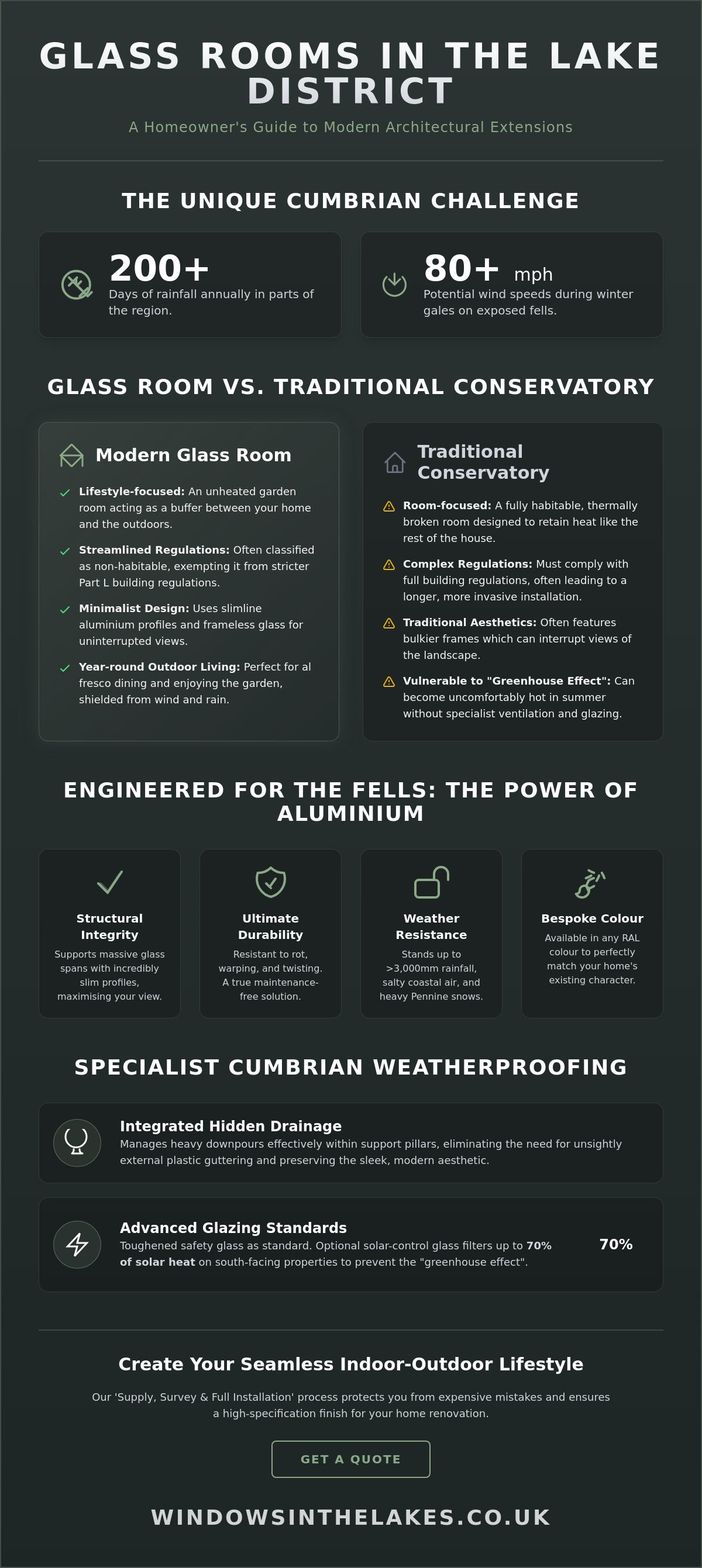
The primary difference lies in the thermal boundary. A conservatory is a habitable room with thermal breaks designed to retain heat like the rest of your house. Glass Rooms are unheated garden rooms that act as a buffer between the interior and exterior. Because they're classified as non-habitable structures, they're often exempt from standard Part L building regulations. This makes the installation process faster and less invasive. You're not just adding a room; you're creating a lifestyle. It's about having a dedicated space for:
- Al fresco dining without worrying about the Cumbrian wind.
- Protecting expensive garden furniture from the rain.
- Enjoying the "outdoor-indoor" transition during the shoulder months of spring and autumn.
The Benefits of Aluminium Frames
Aluminium is the only viable material for these structures. It provides the necessary structural integrity to support massive glass spans with incredibly slim profiles. In a region like Cumbria, where rainfall in areas like Seathwaite can exceed 3,000mm annually, durability is non-negotiable. Aluminium doesn't rot, warp, or twist. It's a maintenance-free solution that stands up to the salty air of the Solway Coast and the heavy snows of the North Pennines. When specifying Glass Rooms, we focus on customisation. You can choose any RAL colour to ensure a perfect match with your existing heritage windows. This level of detail allows the new structure to complement the historic character of a Lakeland property rather than clashing with it. You can explore our full range of aluminium products to see how these frames integrate with other high-end glazing solutions.
Engineering for the Fells: Weatherproofing and Durability
Cumbria's landscape is breath-taking, but it presents a unique set of architectural challenges. With some parts of the Lake District receiving over 2,000mm of rainfall annually, a standard conservatory or glass extension simply won't suffice. When we design Glass Rooms, we treat them as high-performance structures capable of withstanding the North West's volatile microclimates. Every component is selected to ensure the building remains a dry, comfortable sanctuary regardless of the weather outside.
Precision engineering starts with site-specific wind load calculations. A property in an exposed location, such as a hillside in Ambleside, faces significantly higher pressure than a sheltered town garden in Carlisle. We specify our systems based on these variables to ensure the structure remains rigid during winter gales that can reach speeds exceeding 80mph. Beyond wind resistance, we integrate hidden drainage systems within the aluminium support pillars. This manages heavy downpours effectively without the need for unsightly external plastic guttering that ruins the sleek, modern aesthetic. Understanding the legal requirements for these structures is also essential; you can find detailed guidance on Planning Permission for Extensions to ensure your project complies with local building standards from the outset.
Glazing Standards for Exposed Sites
We use toughened safety glass as a non-negotiable standard for every installation. For south-facing properties, solar-control glass is a popular choice. It filters out up to 70% of solar heat while maintaining clarity, preventing the "greenhouse effect" during the summer months. Our high-performance EPDM seals are designed to remain flexible even in freezing temperatures, ensuring water ingress is never an issue during Cumbrian storms. This level of detail prevents the common "expensive mistakes" that occur when using inferior, mass-produced materials that aren't rated for Northern climates.
Structural Integrity in Wind-Prone Areas
The structural frames we specify for homes in Kendal and Keswick often feature thicker aluminium profiles than those used in more sheltered parts of the UK. This provides the necessary tensile strength to support reinforced roof beams, which are essential for snow load capacity at higher elevations. A heavy snowfall can place several tonnes of weight on a glass roof; our designs account for this specifically. This is why our "Supply, Survey & Full Installation" process is so critical. DIY kits often fail in the North West because they aren't built for our specific topography. Professional surveying ensures every millimetre is accounted for before a single component is manufactured, protecting your investment for decades to come.
If you're unsure which specifications your site requires, it's best to book a design consultation to discuss your project's technical needs with a local specialist.
Planning Permission for Glass Rooms in the Lake District
Securing approval for home improvements in a UNESCO World Heritage site requires a nuanced approach. The Lake District National Park Authority (LDNPA) maintains strict guidelines to preserve the region's unique character, meaning standard permitted development rights are often restricted. Unlike a traditional brick extension, Glass Rooms often occupy a unique middle ground in planning logic. This is largely due to their thermal status. Because these structures are typically unheated and separated from the main property by external-grade doors, they're frequently classified differently than habitable rooms, which can simplify certain aspects of the approval process.
In many parts of Cumbria, permitted development allows for modest additions without a full application. However, if your home is within the National Park boundaries or an Area of Outstanding Natural Beauty, these rights are often curtailed by Article 4 directions. You'll generally need a full planning application if the structure sits forward of the principal elevation or exceeds specific height limits. We've found that transparency with local officers regarding the "temporary" nature of the glazed space helps move projects forward efficiently.
Conservation Area Considerations
Protecting the architectural integrity of historic locations like Carlisle's Victorian quarters or Penrith's town centre is a priority for local planners. Officers generally prefer slimline aluminium profiles because they offer minimal visual impact, allowing the original masonry to remain the focal point. Colour choice is equally vital. While Anthracite Grey remains a modern staple, we often recommend Heritage Green or bespoke bronze tones to satisfy strict conservation requirements. These palettes help the structure recede into the Cumbrian landscape rather than competing with it.
The Planning Application Process
You'll certainly need to submit a formal application if your property is Grade II listed, as this requires Listed Building Consent to ensure the fabric of the heritage asset isn't compromised. Our design consultation identifies these technical hurdles at the earliest stage, preventing expensive mid-project delays. We frequently collaborate with local architects to produce sympathetic designs that align with the LDNPA's Design Guide. This professional preparation ensures your Glass Rooms project is viewed as a high-quality addition that enhances, rather than detracts from, the local vernacular.
- Check your deeds: Some modern estates in Cumbria have restrictive covenants that override permitted development.
- Volume matters: Any previous extensions count towards your total permitted volume allowance.
- Consult early: Speaking with a specialist before submitting drawings can save months of back-and-forth with the council.
Designing Your Glass Room for Year-Round Use
A common mistake in home renovation is treating Glass Rooms as seasonal luxuries. In Cumbria, where January temperatures often average a crisp 4°C, a poorly specified space becomes an icebox for half the year. You shouldn't settle for a summer-only extension. By focusing on technical integration during the design phase, you create a high-performance environment that remains comfortable whether it's a humid July afternoon or a frost-laden morning in December. This transition from a simple conservatory to a year-round architectural feature requires a professional approach to climate control and layout.
Heating and Lighting Solutions
Standard convection heating often fails in spaces with high proportions of glazing because warm air rises and escapes. Infrared heating panels are a far more efficient choice. These systems warm objects and people directly rather than heating the air volume, which is vital when the Lakeland fells are visible through the glass. To enhance the atmosphere, integrated LED lighting can be recessed into the aluminium rafters. You can manage both systems through smart controls on your mobile app, allowing you to pre-heat the space before you return from a day on the hills.
Ventilation and Solar Shading
Cumbria receives approximately 1,400 hours of sunshine annually. Whilst this is lower than the south coast, the intensity of solar gain through glass can still cause overheating. External roof blinds are 80% more effective at controlling temperature than internal curtains because they stop heat before it passes through the glazing. For natural air regulation, installing sliding patio doors allows you to create precise cross-breezes. These slimline systems provide flexible ventilation, letting you open the space entirely or just a few inches to keep the air fresh without a draught.
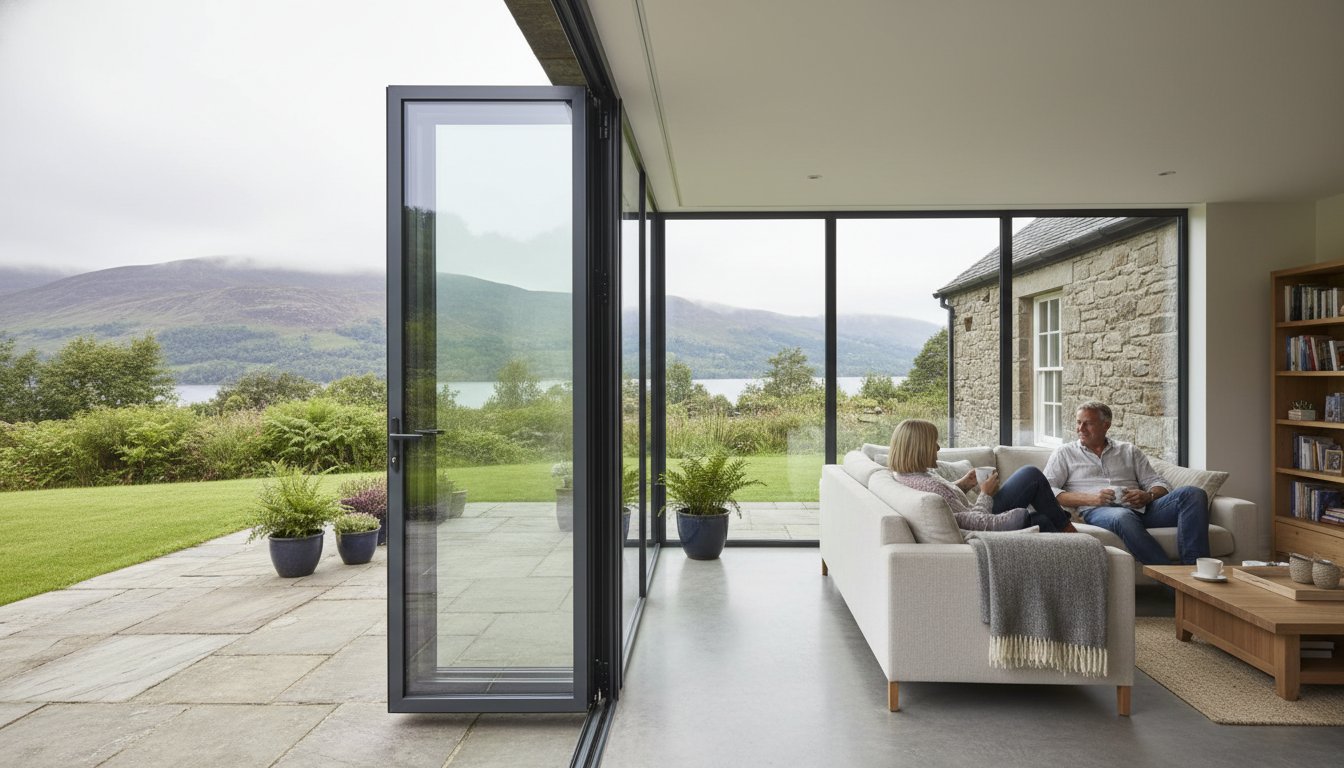
The versatility of these spaces often surprises homeowners. A well-designed room serves as a bright garden lounge during the day and transforms into a sophisticated evening dining room by night. Your choice of flooring is the final piece of the puzzle. Using consistent porcelain tiles or natural stone from your kitchen through to the glass room creates a seamless visual link. This architectural continuity makes the garden feel like a natural extension of your home's interior. It's about creating a space that works for your lifestyle, not just the weather.
Start the conversation about your project by booking a bespoke design consultation with our local specialists.
Professional Installation Across Cumbria and the North West
Choosing a bespoke architectural addition is a significant investment that requires more than just a delivery van and a basic toolkit. We provide a comprehensive, full-service project management experience across the Lake District. Our team handles every stage of the process, including the technical survey, supply, and professional installation. This ensures that every structural calculation and aesthetic detail meets our exacting standards before the first piece of glass arrives on site.
Our installers operate daily throughout the region. We regularly complete projects in Carlisle, Penrith, Windermere, and Barrow, bringing high-specification glazing to homes that demand better than the industry average. We don't believe in a "one size fits all" approach. Every property in the North West has its own character; our job is to ensure your new installation enhances that character while providing modern performance.
We've built our reputation on the "Windows in the Lakes" standard. This means we never use uPVC or flimsy DIY kits for our Glass Rooms. These materials often fail to provide the structural integrity or the slim, elegant sightlines required for premium architectural projects. We focus exclusively on high-grade aluminium and precision-engineered glass. This commitment protects you from expensive mistakes and ensures your extension remains a durable, beautiful part of your home for decades.
Local Expertise and Craftsmanship
Our team brings over 35 years of industry experience to every project in the North West. A local specialist understands Cumbrian building styles and the specific challenges of our local climate far better than a national conglomerate. We know how to work with traditional Lakeland stone and how to specify glass that stands up to the unique weather patterns of the fells. You can see the results of this meticulous approach by reviewing our featured projects for local inspiration and real-world examples of our craftsmanship.
Your Next Steps
Starting your project is a straightforward, professional process designed to put you at ease. You can request a quote online to begin the conversation with our team. We don't use high-pressure sales tactics; instead, we act as consultants to help you make an informed decision. During your home survey and design meeting, we'll assess your site, discuss your vision, and identify any technical requirements. This is where we finalise your specifications, from integrated solar shading to bespoke RAL colour finishes, ensuring your Glass Rooms are perfectly tailored to your Cumbrian home.
Transform Your Living Space with Cumbrian Expertise
Investing in a glass room is about more than just adding floor space; it's about framing the unique beauty of the Lake District whilst ensuring your home remains resilient against the fells' unpredictable weather. You've seen how high-performance aluminium and precision engineering create a year-round sanctuary that avoids the common pitfalls of standard uPVC extensions. Navigating planning permission in National Parks requires specific local insight, and choosing a specialist who understands these unique regulations is essential for a seamless project.
With over 35 years of specialist glazing experience across Cumbria, we've refined a process that prioritises durability and architectural integrity. We don't use uPVC because we know it doesn't meet the high standards required for the North West's climate. Our full-service "Survey, Supply & Install" guarantee ensures every detail of your Glass Rooms project is managed by experts from the initial measurement to the final fit. It's about protecting your investment and your home's aesthetic with a safe pair of hands.
Start the conversation about your bespoke glass room today and let's explore what's possible for your property. We're looking forward to helping you design a space that perfectly complements both your home and the stunning landscape surrounding it.
Frequently Asked Questions
Do I need planning permission for a glass room in the Lake District?
You often don't need planning permission for a glass room if the project falls under permitted development rights, but the Lake District National Park Authority (LDNPA) applies stricter criteria than other regions. If your home is a listed building or sits within a Conservation Area, you'll likely need a formal application. We recommend checking the 50% land coverage limit set by the 2015 General Permitted Development Order to avoid expensive mistakes during your renovation.
Is a glass room warmer than a conservatory in the winter?
Modern glass rooms are significantly warmer than traditional conservatories because they utilise advanced thermal break technology and high-performance glazing. While older plastic structures often suffer from extreme temperature drops, our slimline aluminium systems achieve U-values as low as 1.2 W/m²K. This engineered approach ensures the space remains a comfortable environment during a Cumbrian winter, protecting you from the damp and cold common in poorly specified extensions.
How much does a bespoke aluminium glass room cost to install?
The total investment for a bespoke aluminium installation depends on your specific aperture size, glass specification, and site conditions. According to the 2023 Checkatrade industry report, high-end architectural glazing projects carry a premium over standard uPVC kits due to the quality of materials and structural requirements. Because every Lake District home is different, we provide a detailed survey to ensure your quote is accurate and covers all professional standards from the start.
Can a glass room be attached to a listed building in Cumbria?
You can attach a glass room to a listed building, provided you obtain Listed Building Consent from your local planning office. Historic England often looks favourably on slimline aluminium designs because they're visually lightweight and don't obscure the original 18th or 19th-century masonry. It's vital to demonstrate that the installation is a reversible addition that respects the architectural heritage of the property. We can help you start the conversation with planners to ensure a smooth approval process.
How do you clean the roof of a glass garden room?
You should clean your glass roof using a telescopic water-fed pole or by specifying self-cleaning glass during the design phase. Self-cleaning coatings use UV rays to break down organic grit, which the rain then washes away naturally. In parts of Cumbria where annual rainfall exceeds 2,000mm, this technology is particularly effective. It's a practical way to maintain your views of the fells without the safety risks of using ladders on a regular basis.
Will a glass room increase the value of my property in the Lake District?
Adding a high-quality glass room can increase your property value by approximately 5% to 10% based on national estate agency data. In the Cumbrian market, architectural glazing is a highly sought-after feature because it maximises natural light and creates a seamless connection to the landscape. It's a sophisticated upgrade that differentiates your home from standard properties, making it a sound long-term investment that appeals to premium buyers looking for modern aesthetics.
What is the difference between a glass room and a veranda?
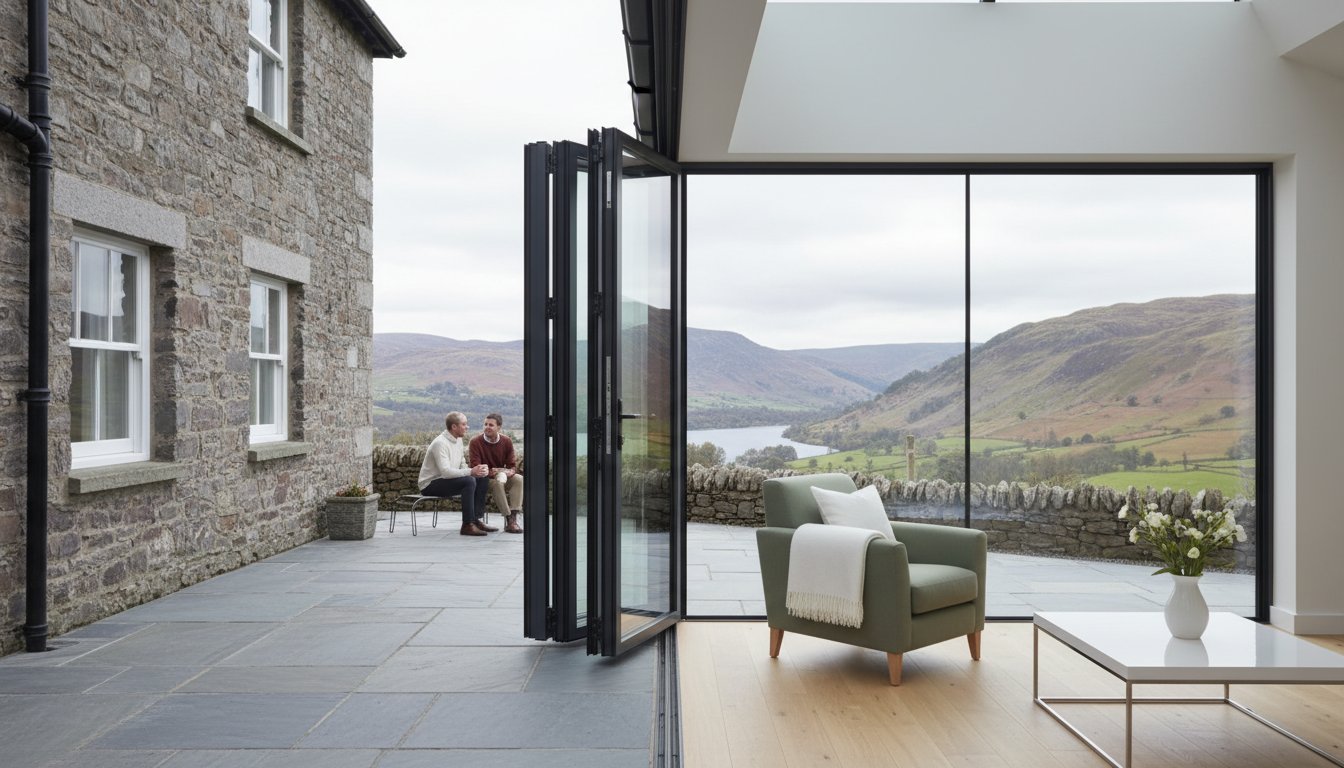
The primary difference is that glass rooms are fully enclosed spaces with integrated side walls, while a veranda is an open-sided roof structure. A glass room provides total protection from the Cumbrian wind and rain, effectively serving as a transparent extension of your home. You can choose to install sliding or bifolding doors that open fully, which gives you the open-air feel of a veranda with the added security of a weatherproof room.
Can I use my glass room year-round in the Cumbrian climate?
You can use your glass room every day of the year if you specify the correct heating and solar-control glass. By incorporating integrated infrared heaters and thermally efficient frames, the space stays inviting even when the temperature drops in January. We specify our aluminium systems to withstand the high wind loads found in the Lake District fells. This ensures your new room isn't just a seasonal luxury but a functional, permanent addition to your living space.