Is that morning haze on your glazing a natural part of the Cumbrian landscape, or is it a permanent mineral film slowly etching into your glass? For those lucky enough to live on the water's edge, the struggle to maintain a clear view of the fells is a daily reality that often feels like a losing battle against the elements. We understand that you didn't invest in a lakefront property to spend your weekends scrubbed up against a pane of glass. When considering Condensation or Coastal Spray? Choosing Easy-Clean Glass for Windermere Lakefronts, it's vital to recognise that the "dirt" you see is often a complex mixture of lake mist and minerals that requires a specialised solution.
This guide will show you how to distinguish between simple internal moisture and damaging external spray, ensuring you choose a long-term solution that adds genuine value to your home. We'll examine why the right easy-clean glass is essential for the local microclimate; whilst also covering how the 2026 thermal regulations and Lake District planning rules affect your choice of high-performance aluminium windows or sliding patio doors. By the end, you'll know exactly how to achieve a pristine, low-maintenance finish that lets the beauty of Windermere shine through without the constant effort.
Key Takeaways
- Identify the difference between harmless internal condensation and mineral-heavy lake spray to protect your glazing from permanent etching.
- Compare hydrophobic and photocatalytic coatings to determine which technology best suits your home's exposure when Condensation or Coastal Spray? Choosing Easy-Clean Glass for Windermere Lakefronts is the priority.
- Learn how specifying the correct easy-clean glass can reduce manual maintenance by up to 70% by utilising natural Cumbrian rainfall.
- Understand why marine-grade aluminium windows and doors are the superior choice for resisting the damp, high-pressure environment of the Lake District.
- Discover the importance of a professional site survey to assess wind loads and spray patterns before investing in new sliding patio or bifolding doors.
The Windermere Dilemma: Why Your Lakefront Views Are Fogging Up
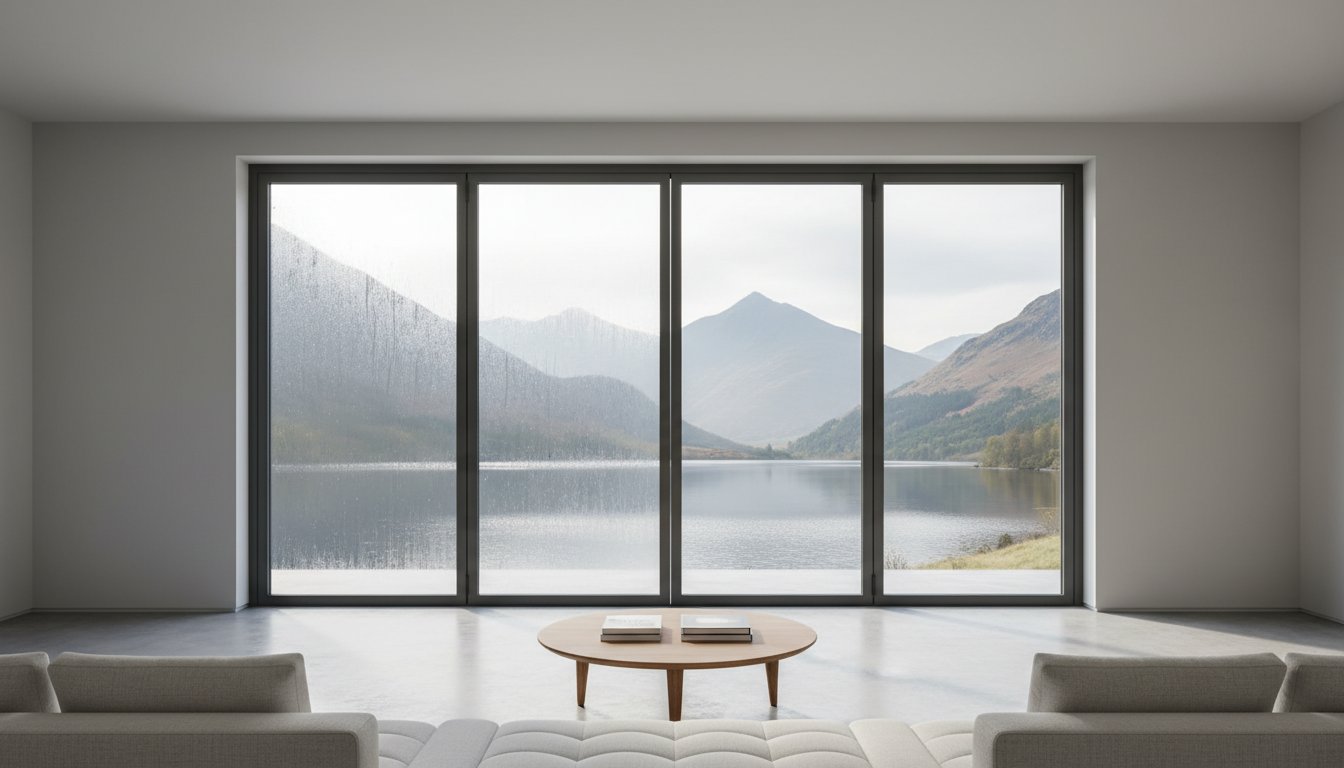
Owning a home on the banks of Windermere means enjoying some of the most dramatic scenery in the UK. However, that world-class view of the fells often disappears behind a stubborn, cloudy haze. Standard glazing often fails in this environment because the Cumbrian microclimate is uniquely aggressive. It isn't just rain; it's a constant cycle of high humidity and wind-driven mist that clings to the surface. When homeowners ask about Condensation or Coastal Spray? Choosing Easy-Clean Glass for Windermere Lakefronts, they're usually dealing with a specific mineral film that standard glass simply wasn't designed to repel.
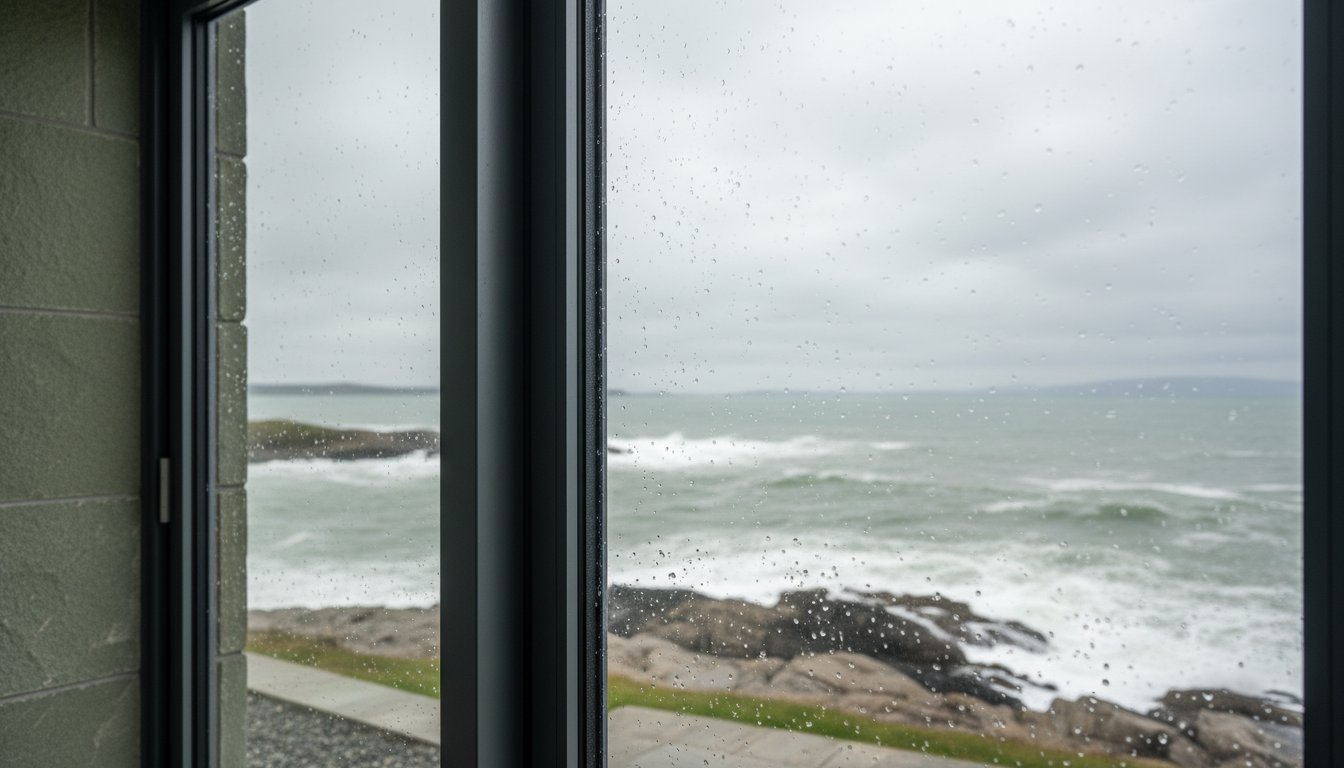
Unlike coastal properties in Morecambe where salt is the primary enemy, Windermere presents a different challenge. The "spray" here is freshwater, but it's rich in organic matter and minerals washed down from the surrounding fells. When this water evaporates on your panes, it leaves behind a microscopic "skeleton" of debris. Over time, this builds up into a milky layer that obscures the "indoor-outdoor" connection that makes lakefront living so desirable. Without the right specification, your windows become a barrier rather than a bridge to the landscape.
Identifying the Culprit: Is it Internal or External?
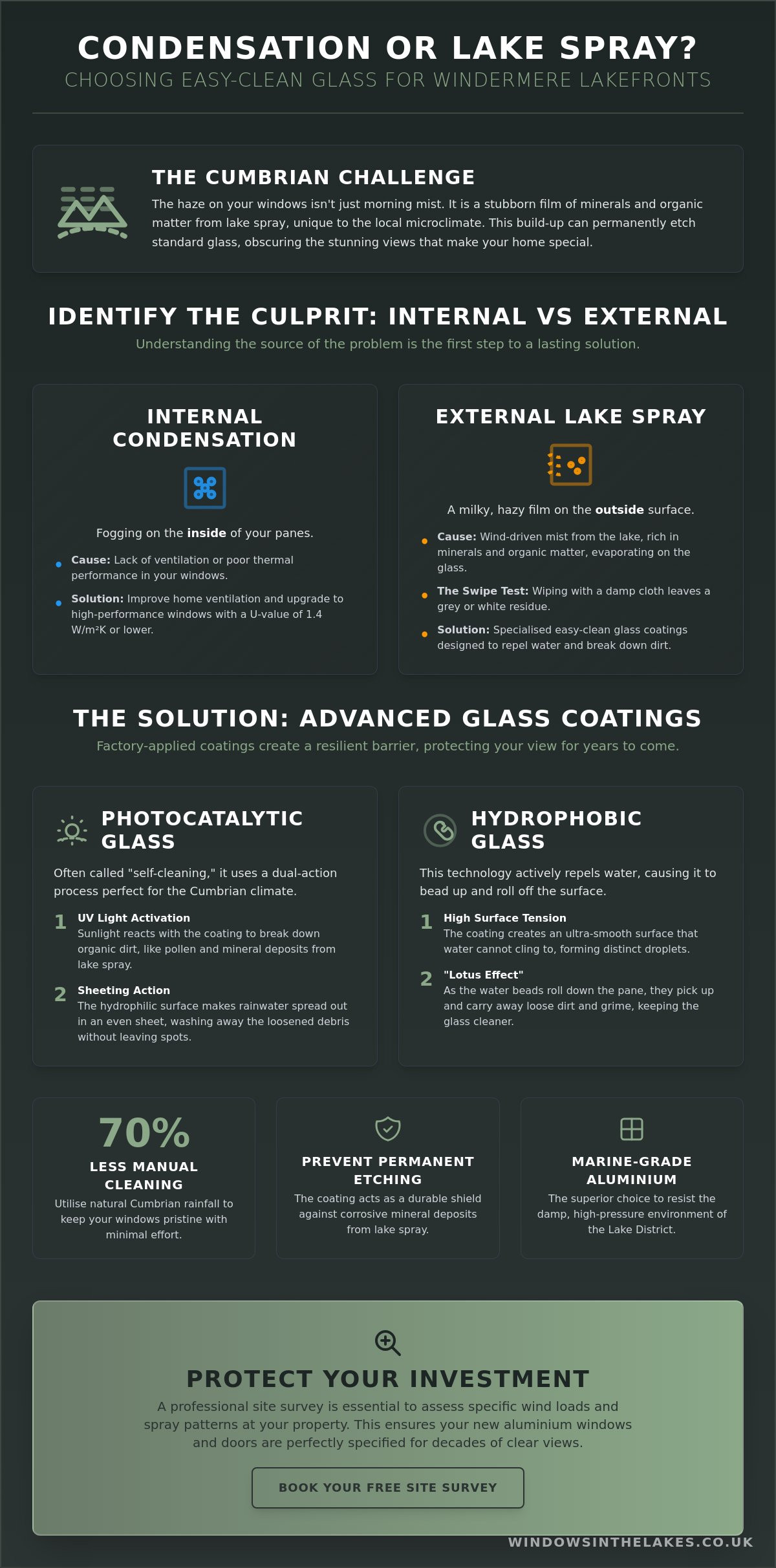
Distinguishing between the two is the first step toward a permanent solution. Internal condensation usually signals a lack of ventilation or poor thermal performance. Under the 2026 Future Homes and Buildings Standards, replacement windows must achieve a maximum U-value of 1.4 W/m²K to combat this thermal bridging. If the fogging is on the outside, try the "swipe test." If a damp cloth leaves a smear of grey or white residue, you're dealing with lake spray. Understanding Easy-Clean Glass Technology is essential here, as it helps you decide if you need a coating that breaks down organic dirt or one that simply lets the rain wash it away.
The Impact of Lake Spray on Lake District Properties
The chemical composition of Lake District rain and spray can be surprisingly harsh on untreated surfaces. Wind patterns across the water's surface accelerate the buildup, forcing moisture into every crevice of your frames. This isn't just an aesthetic issue. Obscured glass can impact property value and dampen the psychological benefits of living amongst the fells. High-specification Aluminium Windows provide a structural frame that withstands this moisture, but the glass itself must do the heavy lifting to maintain that crystal-clear frame of the landscape. Clear views aren't just about maintenance; they're about protecting the investment you've made in your Cumbrian lifestyle.
Understanding Easy-Clean Glass Technology: Hydrophobic vs Photocatalytic
Easy-clean glass isn't a single product. It's a category of advanced High-Performance Glazing where a factory-applied coating alters the glass surface energy. This modification changes how water and dirt interact with the pane. For those debating Condensation or Coastal Spray? Choosing Easy-Clean Glass for Windermere Lakefronts, the choice usually falls between two distinct technologies: photocatalytic and hydrophobic. Each offers a different defensive strategy against the Lake District's relentless humidity and mineral-rich mist.
These coatings are applied during the manufacturing process, meaning they are far more durable than any DIY treatment. In the high-rainfall environment of the North West, durability is paramount. Whilst standard glass is porous at a microscopic level, allowing minerals to take hold, easy-clean technology creates a smoother, more resilient barrier that protects the clarity of your view.
How Self-Cleaning Glass Works in the North West
Photocatalytic glass, often marketed as "self-cleaning," uses a dual-action process. First, it reacts with UV rays to break down organic dirt like pollen or bird droppings. Second, the coating is hydrophilic, meaning water spreads across the glass in an even sheet rather than beading. This sheeting action carries the loosened dirt away. Because Cumbria receives significant rainfall, this technology is particularly effective for large expanses of glass, such as sliding patio doors. However, it's vital to remember that "self-cleaning" is a bit of a misnomer. If the lake spray is exceptionally heavy or the weather stays dry for long periods, a quick rinse with a hose might still be necessary to maintain that pristine finish.
Hydrophobic Coatings: The Shield Against Lake Mist
Whilst photocatalytic glass loves water, hydrophobic coatings repel it. This technology mimics the "lotus leaf" effect, causing water to bead into tight spheres that roll off the surface. This is particularly useful for preventing the mineral deposits found in Windermere spray from "etching" into the glass. Unlike after-market spray-on treatments that wear off within months, factory-applied hydrophobic layers are chemically bonded to the glass during manufacturing. This ensures a lifespan that matches the durability of modern Aluminium Windows. In 2026, these coatings have become more resilient, but they still require an occasional wipe with a soft cloth to remove any stubborn mineral rings that the rain hasn't quite shifted.
Choosing the right technology depends on your property’s specific orientation and its proximity to the water. A home tucked away in the trees might benefit more from hydrophobic tech, whilst a south-facing lakefront lounge is the perfect candidate for photocatalytic glazing. If you're unsure which specification is right for your project, it's worth speaking with a specialist to ensure your view remains unobstructed for years to come.
Condensation vs Lake Spray: A Comparison of Maintenance Needs
Maintaining a lakefront home shouldn't be a full-time job. When evaluating Condensation or Coastal Spray? Choosing Easy-Clean Glass for Windermere Lakefronts, the primary goal is reducing the manual labour required to keep your view clear. By specifying the right coating at the point of installation, homeowners can reduce their cleaning frequency by up to 70%. This shift moves your maintenance routine from heavy scrubbing to a simple "rinse-only" approach, effectively letting the frequent Cumbrian rainfall do the work for you. It's a strategic choice that protects your glass from the permanent "clouding" caused by mineral bake-on.
Whilst the initial cost of self-cleaning glass is approximately 20% higher than standard glazing, the long-term value is significant. You aren't just paying for convenience; you're investing in the longevity of the glass surface. Without protection, the persistent moisture and minerals from the lake can eventually etch the surface, leading to a dull finish that no amount of professional cleaning can fix. Investing in premium glass now ensures your property maintains its aesthetic appeal and market value for decades.
Tackling Persistent Morning Condensation
Internal fogging is often a sign of thermal inefficiency. To meet the 2026 Future Homes and Buildings Standards, replacement windows must now achieve a maximum U-value of 1.4 W/m²K. We often recommend triple glazing for lakefront sites to reach even lower values, effectively eliminating the cold surface where moisture likes to settle. Integrating trickle vents into high-performance aluminium windows is also essential. This ensures your home meets Part F ventilation requirements without compromising the sleek, modern lines of your frames or your view of the fells.
The Corrosive Nature of Freshwater Spray and Grime
It's a common misconception that only salt spray is corrosive. The freshwater spray from Windermere is laden with organic matter and minerals from the surrounding fells. When this mist dries, it creates a stubborn film that acts like a magnet for dust and grit. Easy-clean coatings prevent these particles from bonding to the glass, which also protects the surface from microscopic scratches during cleaning. The table below outlines how different specifications handle these unique Cumbrian challenges.
| Feature | Standard Glazing | Easy-Clean (Hydrophobic) | Self-Cleaning (Photocatalytic) |
|---|---|---|---|
| Cleaning Frequency | Weekly/Fortnightly | Every 2-3 Months | Minimal (Rain Dependent) |
| Mineral Resistance | Low (Prone to etching) | High (Beads water) | Excellent (Sheets water) |
| Maintenance Type | Manual Scrubbing | Light Wipe/Rinse | Natural Rainfall Rinse |
Specifying the Perfect Window: Aluminium Frames and High-Performance Glazing
Selecting the right glass is only half the battle. To truly resolve the debate of Condensation or Coastal Spray? Choosing Easy-Clean Glass for Windermere Lakefronts, you must consider the structural frame that holds it. For lakefront properties, aluminium is the undisputed superior choice over uPVC or timber. Its inherent strength allows for slimmer profiles and much larger expanses of glass, which is vital when your goal is to maximise those panoramic views of the fells. Unlike timber, which requires constant repainting in the damp Cumbrian climate, or uPVC, which can struggle with the wind loads found on the water's edge, aluminium provides a stable, low-maintenance foundation for high-performance glazing.
Modern aluminium systems also offer the aesthetic flexibility required for sensitive Lake District locations. We often specify RAL colours like Anthracite Grey or deeper slate tones that blend seamlessly with local stone and the natural landscape. This ensures your renovation respects local architectural heritage whilst providing a sleek, contemporary finish that won't warp or degrade under the pressure of the elements.
Marine-Grade Powder Coatings for Windermere Homes
Proximity to the water, even a freshwater lake like Windermere, necessitates a higher standard of finish. A marine-grade powder coating is essential because the constant mist and spray can lead to oxidisation on standard aluminium frames over time. This specialised process involves a more rigorous pre-treatment of the metal, ensuring the paint bond is virtually impenetrable. Whether you are installing bespoke double french doors or expansive bifolding systems, this architectural finish is a non-negotiable for lakefront durability. Under the 2026 standards for architectural finishes, these coatings are designed to withstand the unique saturation levels of National Park environments without fading or bubbling.
Choosing the Right U-Values for Thermal Efficiency
Thermal performance is your primary defence against internal condensation. Under the 2026 Future Homes and Buildings Standards, replacement windows must achieve a maximum U-value of 1.4 W/m²K, a target designed to help reach the UK's 31% CO2 reduction goal for homes. At Windows in the Lakes, we focus on high-specification aluminium systems that often exceed these requirements. By using thermally broken frames and triple glazing, we can achieve U-values as low as 0.8 W/m²K. This eliminates the temperature differential that causes moisture to air-drop onto the glass, ensuring your internal view remains as clear as the external one. If you're ready to upgrade your lakefront views with high-specification glazing, you can request a bespoke quote for your project here.
Designing Your Lakefront View with Windows in the Lakes
At Windows in the Lakes, we believe that a successful renovation starts with education rather than a sales pitch. When navigating the complexities of Condensation or Coastal Spray? Choosing Easy-Clean Glass for Windermere Lakefronts, a generic solution is never enough. Every property along the shoreline faces a unique set of environmental challenges, from the direction of the prevailing south-westerly winds to the specific elevation of the fells behind. Our educator-first approach ensures you understand the technical specifications required to protect your investment, rather than just choosing a style from a brochure. We take the time to explain how different glass coatings and frame finishes will behave on your specific site over the next twenty years.
Taking the final step from a conceptual design to a specialist installation requires a partner who understands the local landscape. We encourage you to explore our featured projects to see how we have helped other homeowners in Bowness and Ambleside reclaim their views. These case studies demonstrate the transformative power of combining high-performance aluminium with the correct easy-clean glass specification.
Our Local Survey and Specification Process
A professional site survey is the cornerstone of our process. We don't just measure the aperture; we assess how the wind carries lake mist toward your glazing and identify which elevations are most at risk of mineral buildup. This data allows us to customise glass specifications for different areas of your home. For example, your lakeside sliding patio doors might require a photocatalytic coating, whilst sheltered side windows may only need standard high-performance glazing. We also manage the intricacies of Lake District National Park planning requirements, ensuring your new windows or bifolding doors meet aesthetic standards whilst delivering 2026 levels of thermal efficiency.
Professional Installation in Windermere and Bowness
Expert fitting is just as crucial as the glass technology itself. Even the most advanced easy-clean glazing will underperform if the drainage paths in the aluminium frames aren't perfectly aligned or if the thermal seals are compromised during installation. Our team is committed to the 2026 installation standards, ensuring every unit meets the mandatory U-value targets and Part F ventilation requirements. This meticulous attention to detail prevents the thermal bridging that leads to internal condensation, keeping your frames as dry as your panes. If you are ready to start your journey toward a clearer, more resilient home, you can book your design consultation with our specialist team today.
Preserving Your Connection to the Cumbrian Landscape
Protecting your view of the fells requires more than just standard glass. By understanding the nuances of Condensation or Coastal Spray? Choosing Easy-Clean Glass for Windermere Lakefronts, you've taken the first step toward a lower-maintenance, higher-value home. We've explored how advanced coatings reduce cleaning frequency and why marine-grade aluminium is the only sensible choice for the water's edge.
With over 35 years of industry experience, our team specialises in specifying glazing that withstands the unique pressures of the Lake District. As local experts serving Windermere, Bowness, and the wider region, we ensure every installation meets the stringent 2026 thermal standards whilst respecting our area's architectural heritage. Don't let the weather dictate your view; invest in a solution that lets the beauty of the fells shine through every day.
Book a Design Consultation for Your Windermere Project to discuss your specific site requirements with our specialist team.
Frequently Asked Questions
Does easy-clean glass really mean I never have to wash my windows?
Easy-clean glass is more accurately described as low-maintenance rather than no-maintenance. Whilst it significantly reduces the buildup of lake spray and organic debris, you'll still need to perform a light rinse or wipe occasionally. In a high-exposure area like Windermere, the technology ensures that when you do clean, the process is much faster and requires no harsh chemicals. It prevents minerals from bonding to the surface, protecting your view for the long term.
Is self-cleaning glass more effective in the rainy Lake District climate?
Yes, the frequent rainfall in the Lake District actually makes self-cleaning glass more effective. The photocatalytic coating uses UV rays to break down organic dirt, whilst the rain sheets across the glass to wash it away. This natural cycle is perfect for Cumbrian homes where manual cleaning can be difficult due to wind or height. It turns our local weather into a maintenance tool, keeping your glazing clearer between professional cleans.
Can I get easy-clean coatings on my aluminium entrance doors?
Absolutely, we can specify easy-clean glass for the glazed panels in our aluminium entrance doors. This is a wise choice for lakefront properties where the front elevation is often the first to be hit by wind-driven mist. By protecting the glass in your entranceway, you ensure a pristine first impression whilst reducing the time spent scrubbing away mineral deposits that typically accumulate on standard door glazing.
How long do easy-clean glass coatings typically last in Windermere?
Factory-applied easy-clean coatings are chemically bonded to the glass surface, meaning they are designed to last the lifetime of the double-glazed unit. Unlike after-market sprays which degrade within months, this permanent layer withstands the harsh Cumbrian elements. When considering Condensation or Coastal Spray? Choosing Easy-Clean Glass for Windermere Lakefronts, investing in factory-specification glass ensures your protection won't wash away after a particularly stormy winter on the lake.
What is the difference between condensation on the inside and outside of the glass?
Internal condensation suggests that moisture from your home is hitting a cold surface, often indicating poor ventilation or low thermal efficiency. External condensation is actually a sign of high-performance glazing. It occurs when the outer pane is so well-insulated from your home's heat that it remains cold, causing morning dew to settle on it. Both can obscure your view, but only internal moisture risks damaging your frames and interior finishes.
Will marine-grade aluminium frames prevent the paint from peeling near the lake?
Yes, marine-grade powder coatings are specifically designed to prevent the oxidisation that leads to paint bubbling or peeling. In a high-moisture environment like Windermere, standard finishes can fail prematurely. Our marine-grade treatment involves a more rigorous pre-treatment process, creating a superior bond between the paint and the aluminium. This ensures your frames remain as sleek and durable as the day they were installed, even with constant exposure to lake mist.
Is triple glazing necessary to stop condensation in Windermere lakefront homes?
Whilst high-quality double glazing can manage condensation, triple glazing is increasingly recommended to meet the 2026 Future Homes Standard targets of 0.8 W/m²K. By keeping the internal glass temperature closer to the room temperature, triple glazing effectively eliminates the cold spot where moisture air-drops. For exposed lakefront sites in Windermere, the extra pane also provides superior acoustic insulation against the wind, making it a sound investment for both clarity and comfort.
Can easy-clean glass be applied to existing windows, or do I need new ones?
True easy-clean or self-cleaning properties must be applied during the manufacturing process, so you would typically need to replace your existing glass units. Whilst DIY spray-on treatments exist, they lack the durability and chemical bond of factory-applied coatings. Replacing your glazing also allows you to upgrade to the latest 2026 thermal specifications, ensuring your windows are compliant with modern building regulations whilst providing the long-term maintenance benefits of advanced glass technology.