Could the wrong choice of glazing actually disconnect you from the very landscape you moved to the Lake District to enjoy? When weighing up Cortizo Cor Vision vs. Traditional Bifolds: Which Suits a Lakeland Stone Cottage?, many homeowners worry that modern frames will clash with rugged Cumbrian stonework or fail against the driving rain of the fells. You want to invite the outside in without compromising the heritage character of your property or your comfort during a damp January.
I understand that striking a balance between a traditional aesthetic and 21st-century thermal performance feels like a high-stakes gamble. This guide helps you navigate that tension by comparing the minimalist 20mm interlocks of the Cortizo system against the versatile, wide-opening nature of traditional bifolds. You'll learn which configuration achieves the 1.4 W/m²K U-value required for replacements whilst satisfying local planning officers, and which design truly turns the Lakeland fells into a living masterpiece.
Key Takeaways
- Learn how to offset the "heavy" aesthetic of traditional Lakeland stone by using slimline aluminium frames to maximise light ingress through deep wall reveals.
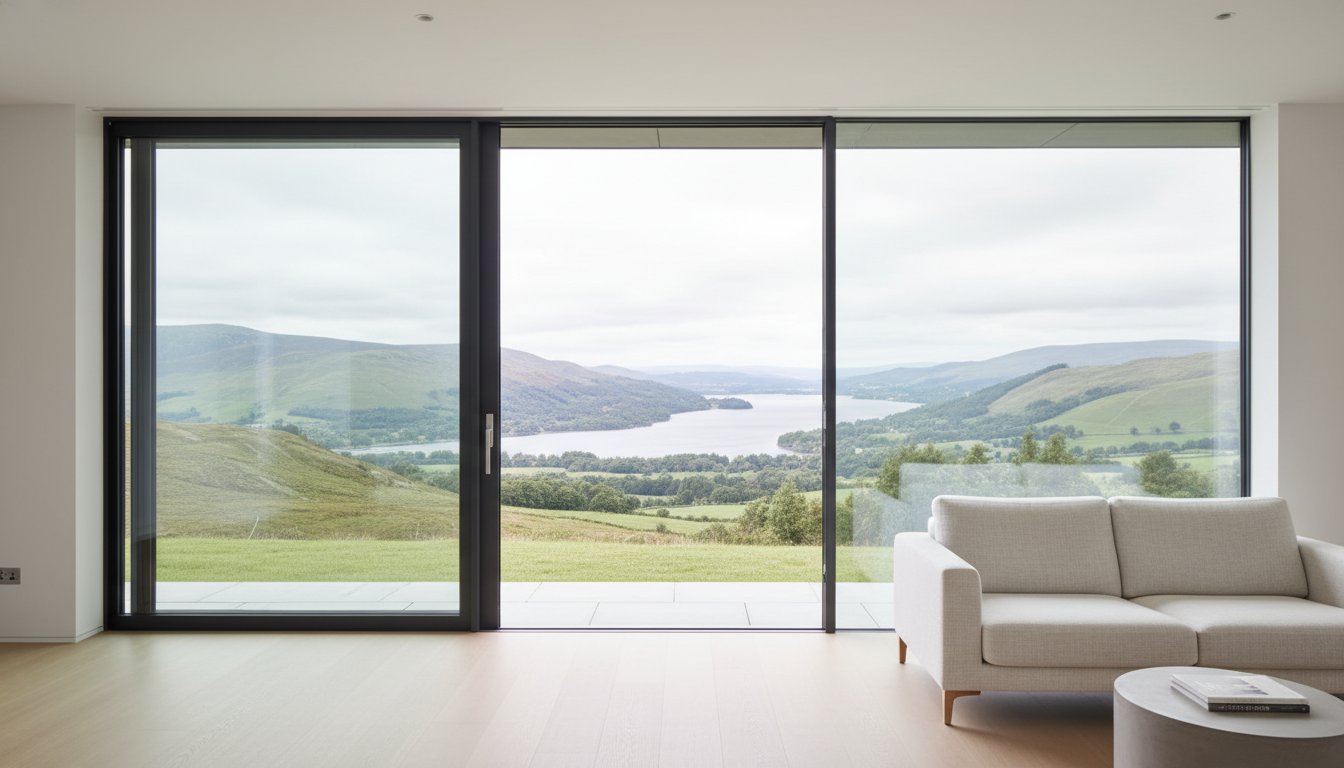
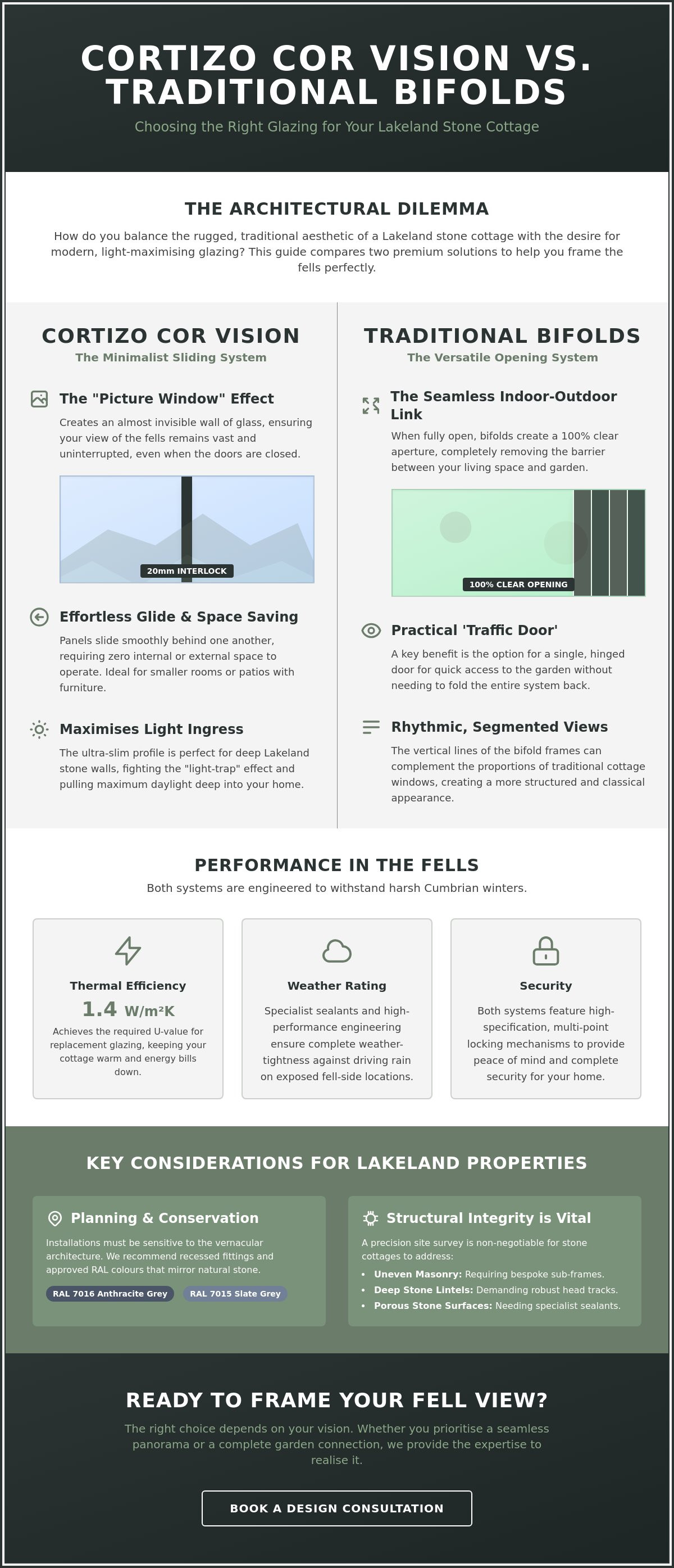
- Understand the "Picture Window" effect of the Cortizo Cor Vision, which uses a 20mm interlock to ensure your view of the fells remains uninterrupted even when the doors are closed.
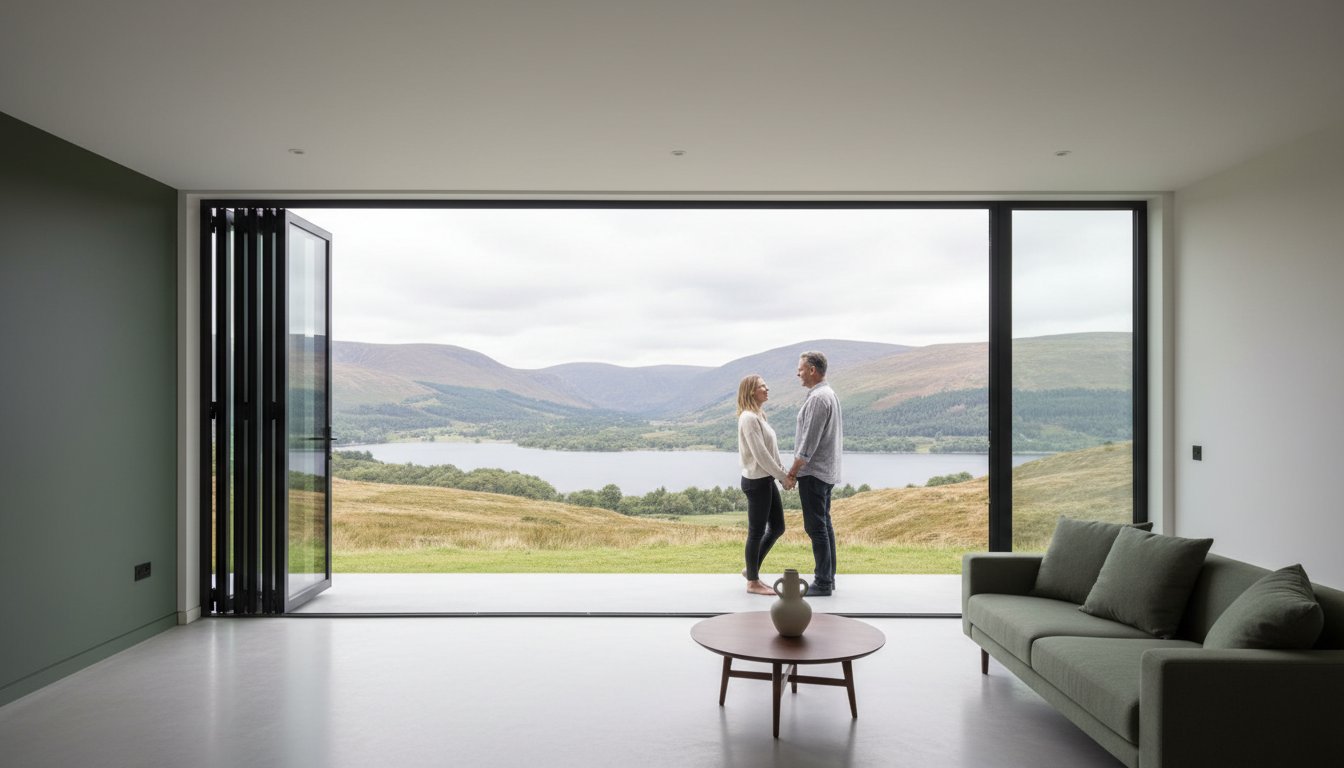
- Evaluate the practical benefits of bifolding doors, including the essential "traffic door" for daily use and the ability to create a seamless 100% clear aperture during the Cumbrian summer.
- Discover the critical performance metrics regarding weather sealing and thermal efficiency when comparing Cortizo Cor Vision vs. Traditional Bifolds: Which Suits a Lakeland Stone Cottage? in exposed locations.
- Identify why a specialist site survey is vital to assess floor levels and stone stability before committing to a high-specification glazing installation.
The Architectural Dilemma: Modern Glazing for Heritage Lakeland Stone
Lakeland stone is defined by its permanence and visual weight. Whether it's the blue-grey slate of North Lakeland or the warmer grits of the south, these buildings were designed to withstand the fells, not to invite them inside. When you introduce modern aluminium into this equation, you create a fascinating architectural tension. The goal for any 2026 renovation isn't just to add a door; it's to find a symbiotic balance where the lightness of the frame complements the mass of the masonry. When deciding between Cortizo Cor Vision vs. Traditional Bifolds: Which Suits a Lakeland Stone Cottage?, the first hurdle is rarely the glass itself, but the masonry that holds it.
Traditional Cumbrian cottages feature walls that are often over 600mm thick. These massive structures create deep reveals that can act as light-traps, swallowing the sun before it ever reaches your living space. A minimalist sliding system like the Cortizo Cor Vision uses its slim profile to maximise the "glass-to-wall" ratio, reclaiming that lost light. Conversely, a bifolding door offers a more rhythmic, segmented look that some feel better matches the vertical proportions of older cottage windows. In 2026, the primary design trend is "framing the fells," treating your exterior view as a curated piece of art rather than just a garden exit.
Planning and Conservation in the Lake District
Securing approval from the Lake District National Park Authority requires a sensitive touch. Understanding the vernacular architecture of the region is essential before making structural changes. Planning officers often look for "recessed" installations that don't sit flush with the outer stone, as this preserves the shadow lines of the original building. To help your project blend in, we recommend RAL colours like Slate Grey (7015) or Anthracite Grey (7016), which mirror the natural tones of wet Lakeland slate. Whilst a minimalist modern look is popular, some conservation areas may still require a "Heritage" aesthetic with slightly wider profiles to mimic traditional timber proportions.
Structural Considerations for Cumbrian Cottages
Unlike a standard brick-and-mortar extension, a stone cottage presents a unique challenge: no two stones are perfectly level. When you're installing a system with a 20mm interlock, even a 2mm deviation across a four-metre span can lead to operational failure. This is why precision surveying is non-negotiable. You can see how we've handled these technical hurdles in our featured case studies.
- Uneven Masonry: We use bespoke sub-frames to create a perfectly level "envelope" within the irregular stone opening.
- Deep Lintels: The choice of head tracks must account for the weight of the stone above to prevent sagging over time.
- Weather-Tightness: Specialist sealants and expanding foams are required to bridge the gap between sleek aluminium tracks and the rugged, porous surface of traditional stone.
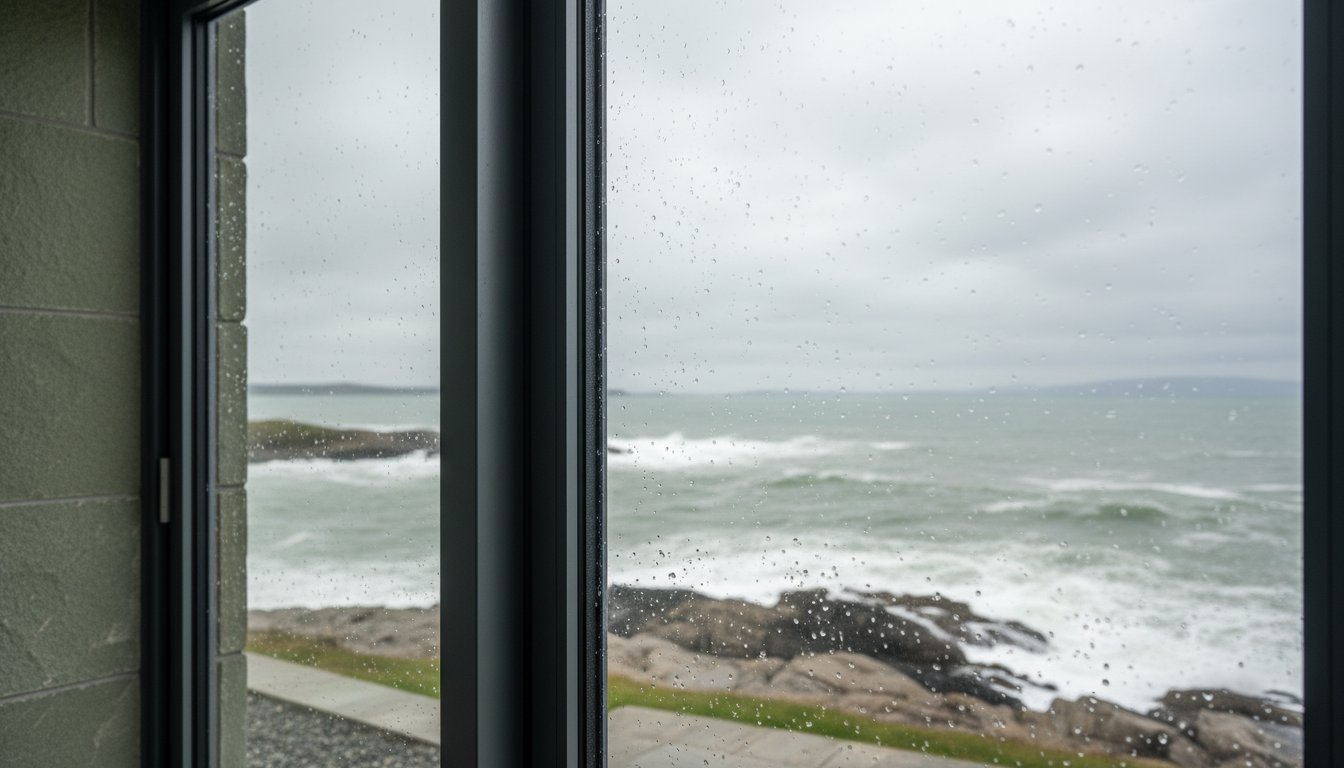
Choosing the right system means ensuring it can handle the driving rain of an exposed fell-side location. Both systems must meet the current Part L requirement of a 1.4 W/m²K U-value for replacements, ensuring your cottage remains warm during a harsh Cumbrian winter.
Cortizo Cor Vision: The Case for Minimalist Slimline Sliding Doors
The Cortizo Cor Vision represents a significant shift in how we perceive the boundary between a traditional stone interior and the Cumbrian fells. Whilst older glazing systems often felt like a barrier, this minimalist sliding door is designed to be felt rather than seen. At the heart of its appeal is an industry-leading 20mm interlock. To put that into perspective, it's roughly the width of a pound coin. When you're deciding on Cortizo Cor Vision vs. Traditional Bifolds: Which Suits a Lakeland Stone Cottage?, this ultra-slim profile is the primary reason why homeowners choose the sliding option. It turns a standard opening into a panoramic lens.
The "Picture Window" effect is a term we use frequently during design consultations. In a Lakeland cottage, you're often dealing with smaller rooms where every square inch of natural light is precious. Unlike other systems that require thick frames to support the weight of the glass, the Cor Vision allows the landscape to take centre stage. Even when the doors are fully closed against a winter gale, your view remains virtually unobstructed. The transition from your kitchen to the patio is further enhanced by flush threshold options. By sinking the track into the floor, we create a level transition that removes trip hazards and creates a continuous flow of flooring from inside to out.
Why 20mm Sightlines Change the Interior Feel
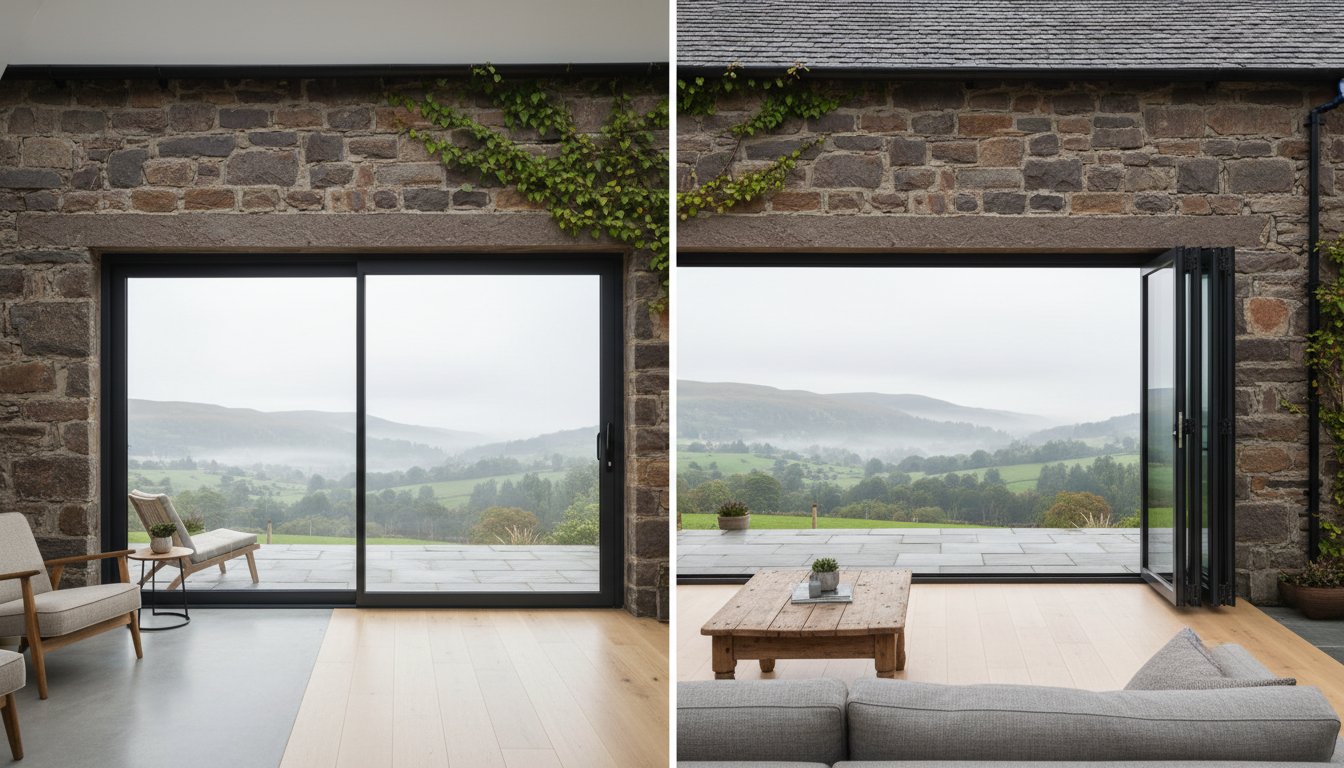
Traditional bifolds, by their very nature, require multiple vertical frames that "stack" together. In a three-metre opening, this can result in several thick pillars of aluminium breaking up your view. The Cor Vision eliminates this visual clutter. By reducing the frame to a single 20mm vertical line where the panels meet, the psychological connection to the outdoors is strengthened. It makes a historically dark cottage room feel expansive and airy. If you are looking for inspiration on how this looks in a heritage setting, you can browse our sliding patio doors to see the system's sleek profile in detail.
Technical Excellence: Cortizo Engineering
Don't let the slim aesthetics fool you; the engineering is robust enough for the most exposed fell-side locations. The Cor Vision system achieves a U-value of 1.3 W/m²K, comfortably exceeding the 1.4 W/m²K requirement for replacement projects in existing dwellings. This thermal efficiency is achieved through advanced thermal break technology that prevents the "cold bridge" effect common in older metal frames.
- Effortless Glide: Despite the weight of high-specification glass, the panels move along stainless steel rails with a simple one-handed operation.
- Maximum Pane Sizes: For barn conversions or large extensions, the system can support individual glass panels up to 4 metres in width or height.
- High Security: Each installation features a multi-point locking system, ensuring that your home remains secure without the need for bulky, unsightly hardware.
This combination of minimalist design and rigorous thermal performance makes the Cor Vision a formidable contender for any Cumbrian property where the view is the priority.
Traditional Bifolds: Versatility and the Indoor-Outdoor Connection
Whilst the Cor Vision prioritises the view as a static, curated image, traditional bifolding doors are designed for the moments when the boundary between your kitchen and the Lakeland air completely disappears. The primary advantage of a bifold system is the ability to achieve a 100% clear aperture. By folding the panels back against the stone wall, you remove the physical barrier entirely. This is a transformative feature for social hosts in Windermere or Keswick, allowing a summer barbecue to flow naturally from the patio into the heart of the home. When considering Cortizo Cor Vision vs. Traditional Bifolds: Which Suits a Lakeland Stone Cottage?, the decision often rests on how you intend to use the space during those rare, glorious Cumbrian heatwaves.
Practicality is another area where bifolds often win the debate. Most configurations include a "traffic door," a single leaf that operates independently like a standard entrance door. For daily Lakeland life, this is essential. Whether you are letting the dog out into the garden or heading out for a fell walk in the rain, you don't want to slide a massive glass pane and expose the entire room to the elements. Instead, the traffic door provides quick, convenient access without compromising the thermal integrity of the rest of the system. The segmented aesthetic of the vertical frames also creates a rhythmic pattern that can mimic the traditional "stable door" feel found in many heritage properties.
Configuring Bifolds for Smaller Apertures
In a smaller stone cottage, a three-panel bifold can sometimes feel "busy" compared to a two-pane slider. Each vertical frame adds visual weight, which might break up a particularly stunning view of the fells when the doors are shut during the winter months. You must also decide between an "open-in" or "open-out" configuration. Most Cumbrian homeowners opt for "open-out" to save precious internal floor space, though this requires a clear, level patio area for the folded glass to sit. If you are unsure which layout fits your floor plan, our team can help you visualise the options during a design consultation.
Modern Aluminium Bifold Performance
Modern aluminium technology has eliminated many of the historical weaknesses of folding doors. High-specification bifolds now achieve U-values as low as 1.1 W/m²K with triple glazing, easily surpassing the 1.4 W/m²K requirement for replacement projects. This ensures that even when the wind howls across the fells, your living room remains draught-free and warm.
- Safety First: Modern systems feature finger-safe gaskets and child-friendly hardware to prevent accidents during operation.
- Cumbrian Durability: Marine-grade powder-coated finishes are standard, protecting the aluminium from the corrosive effects of salt air and persistent rain.
- Precision Movement: High-quality bottom-rolling carriages ensure the doors glide smoothly, even after years of exposure to the Lakeland climate.
Whilst they may have more visible frames than a sliding system, the versatility of bifolding doors makes them a dependable choice for active families and those who love to entertain.
Performance in the Fells: Weather Rating, Thermal Efficiency, and Security
Living on an exposed fell-side requires a different level of technical specification than an urban property. When evaluating Cortizo Cor Vision vs. Traditional Bifolds: Which Suits a Lakeland Stone Cottage?, the debate often shifts from aesthetics to how the system handles a Force 8 gale. Air permeability and water tightness are measured in classes, and in the Lake District, we only specify systems that reach the highest ratings. Sliding doors like the Cor Vision often have a natural advantage in high-wind scenarios; because the glass sits deep within a track, the wind pressure actually pushes the panels tighter against the seals, rather than pulling at a hinge or a handle.
A common concern with bifolding doors in high-altitude locations is the "bifold whistle." This high-pitched noise occurs when wind forces its way through microscopic gaps in the seals. It's almost always a symptom of poor installation or a frame that hasn't been set perfectly square within the stone opening. Our survey-led approach ensures that every seal is compressed exactly as the manufacturer intended, keeping the Cumbrian wind where it belongs, outside. In terms of thermal performance, the 2026 Building Regulations for replacement projects in existing dwellings mandate a maximum U-value of 1.4 W/m²K. The Cortizo Cor Vision comfortably hits 1.3 W/m²K, whilst high-specification bifolds with triple glazing can achieve 1.1 W/m²K, helping to mitigate the dampness often found in traditional masonry.
Battling the Cumbrian Elements
Threshold design is critical for weatherproofing. Whilst flush thresholds look sleek, they require integrated drainage channels to prevent water ingress during heavy Lakeland downpours. A thermal break is an insulated barrier within the aluminium profile that reduces heat transfer and prevents condensation from forming on your internal frames. This engineering detail is what keeps your interior walls dry and free from mould growth during a long Cumbrian winter. Sliding systems generally offer a more robust seal against driving rain because they have fewer vertical joints where water can find a path through.
Security and Peace of Mind
Security shouldn't be an afterthought in a rural renovation. Both systems are tested to PAS 24 standards, but they achieve security through different methods. Bifolds typically use shoot-bolts that lock into the top and bottom tracks, whereas sliding doors utilise heavy-duty hook locks that grip the frame. We also recommend laminated glass for properties in more secluded locations, providing an extra layer of impact resistance and sound insulation. For more on how these standards compare to other styles, you can read our guide on French Door security.
If you're concerned about how your specific location will affect the long-term performance of your glazing, request a technical quote to see our weather-rated specifications for the fells.
Making the Choice: Design Consultation for Your Cumbria Property
Deciding between Cortizo Cor Vision vs. Traditional Bifolds: Which Suits a Lakeland Stone Cottage? ultimately comes down to a choice between the frame and the glass. If your priority is the "Picture Window" effect where the glass becomes a transparent wall, the Cor Vision is the logical choice. However, if you value the ability to completely remove the barrier between your home and the garden, the versatility of a bifold system is hard to beat. Beyond the opening mechanism, the structural reality of your property will play a significant role in this decision. Traditional Cumbrian masonry is rarely uniform, and the technical success of your installation depends on how the frame interacts with these irregular surfaces.
The specific challenge of a Lakeland cottage lies in the thick, uneven stone walls. Unlike a modern brick cavity wall, stone properties often have internal rubble cores and varying depths. A professional survey is vital to assess stone stability and ensure the lintels can support the weight of high-specification glass. We pay particular attention to floor levels; achieving a flush threshold requires precise calculations to ensure the track is recessed without compromising the building's damp-proof integrity. This level of detail is why local expertise in Penrith, Kendal, and Carlisle is so important. We understand the regional building techniques and the unique weather pressures of the fells, ensuring a fit that is both beautiful and permanent.
I encourage you to visit us and feel the operation of these systems in person. Testing the effortless glide of a 4-metre sliding pane or the rhythmic fold of a bifold door provides a level of reassurance that a brochure simply cannot match. You can see how these systems look when integrated into traditional architecture by exploring our case studies, which feature real Cumbrian homes facing the same design dilemmas as yours.
Your Project Roadmap
Our process moves through logical stages, from the initial design consultation to the final sign-off by our local installation teams. We specialise in the logistics of the Lake District, which often involves navigating narrow lanes and remote fell-side sites that national suppliers struggle to reach. Every project is survey-led, meaning we don't just supply a product; we engineer a solution that accounts for your cottage's specific masonry and orientation. This protective, expert-led approach ensures your renovation adds long-term value to your property while respecting its heritage character.
Next Steps for Your Renovation
Preparing for a glazing survey is straightforward. We'll need clear access to the internal and external wall faces to take precise measurements and check for structural movement. It's also wise to time your installation carefully. Whilst we work year-round, many homeowners prefer to schedule their fit during the spring or summer to avoid the worst of the Lakeland winter. This ensures the masonry remains dry during the critical sealing process. If you're ready to see how these materials can transform your living space, book a design consultation to explore the Cortizo Cor Vision and our bifolding ranges in detail.
Transforming Your Cumbrian Home with Precision Glazing
Selecting the right glazing for a heritage property involves more than just picking a style; it requires a deep understanding of how modern aluminium interacts with rugged Cumbrian masonry. When weighing up Cortizo Cor Vision vs. Traditional Bifolds: Which Suits a Lakeland Stone Cottage?, remember that your choice defines how you'll experience the fells for decades to come. Whether you prefer the minimalist 20mm sightlines of a sliding system or the 100% clear aperture of a bifold, the technical execution is what ensures your home remains a warm, secure sanctuary against the elements.
With over 35 years of local Cumbrian industry experience, we specialise exclusively in high-end aluminium glazing designed for the unique demands of the Lake District National Park. We don't sell generic kits or uPVC. Instead, we provide a full-service installation that respects the character of your stone cottage whilst meeting the latest thermal standards. Our survey-led approach removes the risk from complex renovations, protecting you from common pitfalls like poor weather sealing or structural misalignment.
Ready to frame your view? Request a bespoke quote for your Lakeland project and let our experts guide you through the technicalities of your renovation. Your dream transition between traditional charm and modern performance is well within reach.
Frequently Asked Questions
Which is better for a small Lakeland cottage, sliding doors or bifolds?
Sliding doors are generally the superior choice for compact cottages because they don't require any internal or external stacking space. Whilst bifolds need a clear area for the folded panels to rest, sliding doors remain within their own track. This makes them ideal for properties with limited patio space or smaller rooms where every square inch of floor area is precious.
Are Cortizo Cor Vision doors warm enough for a house in the Lake District?
Yes, Cortizo Cor Vision doors are specifically engineered to exceed the thermal requirements of the damp Cumbrian climate. They achieve a U-value of 1.3 W/m²K, which is better than the current 1.4 W/m²K requirement for replacement projects in existing dwellings. This high level of thermal efficiency ensures your living space remains comfortable and free from draughts even during the harshest fell-side winters.
Do I need planning permission to install bifold doors in a stone cottage?
You will likely require planning permission if your cottage is situated within the Lake District National Park or a designated conservation area. Local planning authorities often have specific requirements regarding the materials and design of new glazing to ensure it respects the local vernacular. It is essential to check with your local council or National Park officer before commencing any structural work.
Can bifold doors handle the high rainfall in Cumbria without leaking?
Modern aluminium bifold doors are designed to be completely watertight when fitted with a weather-rated threshold and high-quality gaskets. However, in extremely exposed locations, sliding doors often provide a more robust defence against driving rain. This is because the wind pressure naturally pushes the sliding panels tighter against the seals, whereas bifolds rely entirely on the compression of the folding mechanism.
What is the difference in sightlines between Cortizo Cor Vision and standard bifolds?
The most significant difference is the width of the vertical frames. The Cortizo Cor Vision features an ultra-slim 20mm interlock, whilst traditional aluminium bifolds typically have sightlines of 120mm or more where the panels meet. This stark contrast is a central point in the Cortizo Cor Vision vs. Traditional Bifolds: Which Suits a Lakeland Stone Cottage? debate for homeowners who value an uninterrupted view.
How much does it cost to install aluminium doors in a stone wall?
The cost of installation depends on the structural complexity of your masonry and the size of the opening. Stone walls are rarely level and often require bespoke sub-frames or specialist lintel work to ensure a precise, weather-tight fit. We provide detailed, technical quotes after a professional site survey to ensure all structural requirements for your specific Cumbrian property are fully accounted for.
Which system is more secure against intruders in rural areas?
Both systems are highly secure and tested to PAS 24 standards, though they use different locking methods. Bifolds typically utilise internal shoot-bolts that lock into the tracks, while sliding doors use heavy-duty hook locks. For added peace of mind in secluded rural locations, we recommend specifying laminated glass, which provides an extra layer of protection against forced entry and accidental impact.
Can I have a flush threshold with sliding doors in an old property?
Yes, achieving a flush threshold is possible in heritage properties, but it requires careful planning regarding floor levels and drainage. When deciding Cortizo Cor Vision vs. Traditional Bifolds: Which Suits a Lakeland Stone Cottage?, remember that a flush finish requires a recessed track and a specialist drainage tray. This ensures that even during heavy downpours, water is directed away from your interior flooring.