What if the traditional timber door you've always admired is actually the hidden cause of your rising energy bills and seasonal maintenance stress? For homeowners across Cumbria, the reality of horizontal rain and fell-side winds means that materials which look good in a showroom often fail in the wild. You likely want an entrance that respects the unique heritage of your property but don't want to settle for uPVC that can look out of place against Cumbrian stone.
We understand that choosing an aluminium door is a significant architectural investment, especially with global aluminium prices reaching $3,550 per tonne in April 2026. This guide shows you how to select a style that offers a 30 year lifespan whilst easily meeting the mandatory 1.4 W/m²K U-value standards required by the latest Building Regulations. We will preview the most durable slimline trends for the Lake District and share our specialist framework for avoiding the common pitfalls of local installations so you can start the conversation with confidence.
Key Takeaways
- Learn why the Cumbrian climate demands the structural integrity of aluminium to prevent the warping and swelling common with timber alternatives.
- Understand how modern thermal breaks and low U-values allow your new aluminium door to exceed current Building Regulations whilst keeping your home warm during harsh Lakeland winters.
- Discover how to select the right architectural style, from slimline heritage frames for traditional cottages to expansive sliding panels that maximise fell-side views.
- Identify the specific performance standards required to withstand the high wind-loading of the Eden Valley and salt-air corrosion in coastal towns like Barrow.
- See why a professional "Survey-First" approach is essential for the non-standard stone openings found in many Lake District properties to avoid expensive installation errors.
Why Aluminium Doors are Replacing uPVC and Timber in Cumbria
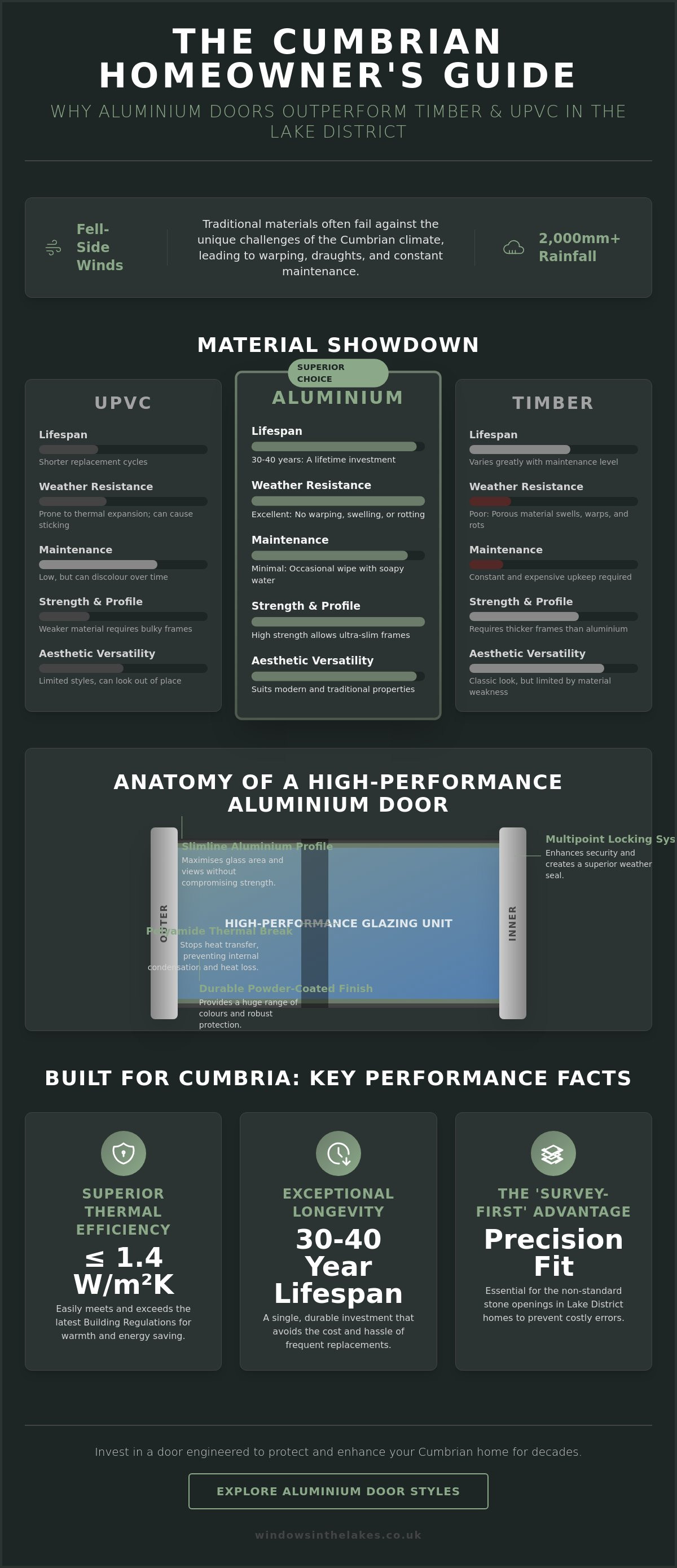
Cumbrian homeowners are moving away from traditional materials in favour of high-performance alternatives that can actually survive the local climate. Timber doors, whilst beautiful, often fail when subjected to the 2,000mm of annual rainfall seen in parts of the Lake District. Wood is porous; it swells, warps, and eventually rots without constant, expensive maintenance. This has led to a fundamental change in how we approach fenestration in architecture across the county. Many are finding that the classic look they desire is better served by materials that don't degrade under the pressure of a Pennine gale.
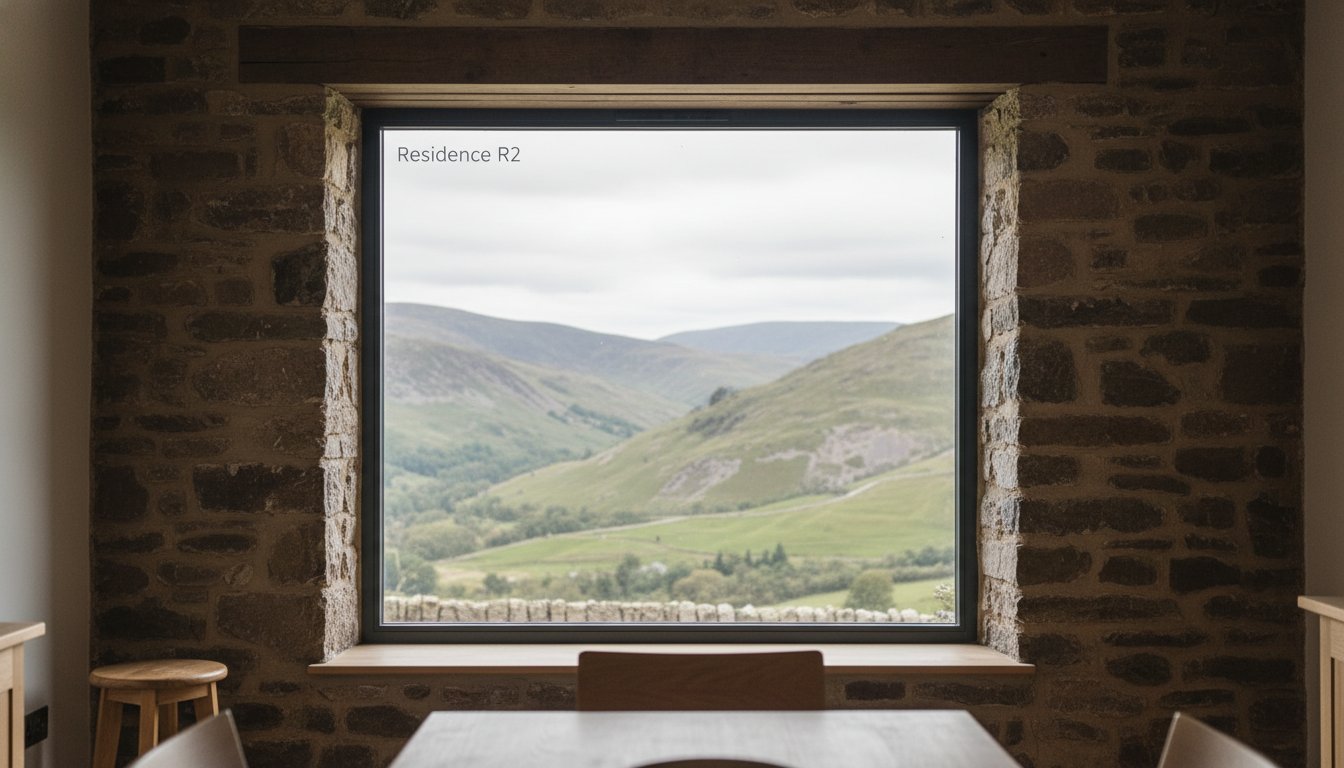
A modern aluminium door represents a significant shift in engineering. Because aluminium is inherently stronger than plastic or wood, the frames can be manufactured with much slimmer profiles. This allows for a greater ratio of glass to frame. In a region where the view of the fells is a primary property asset, the ability to maximise natural light without compromising on structural safety is a decisive advantage. These systems are designed for a 30 to 40 year lifespan, requiring nothing more than an occasional wipe with soapy water to maintain their appearance.
Aluminium vs. uPVC: The Real Value Comparison
The primary technical difference between these materials lies in thermal expansion. Plastic frames can expand and contract significantly during temperature swings, leading to sticking locks and draughts. Aluminium is far more stable; it doesn't bow or twist when the sun finally hits your patio. Whilst the initial investment for aluminium is higher, the long-term ROI is superior. Industry data from April 2026 shows a clear shift toward "premiumisation", with homeowners spending more on durable materials to avoid the frequent replacement cycles of cheaper uPVC. You aren't just buying a door; you're investing in a component that won't need replacing for decades.
Overcoming the "Modern" Myth for Traditional Homes
There is a common misconception that metal doors only suit ultra-modern builds. This isn't the case. In towns like Penrith and Kendal, bespoke aluminium systems are becoming the standard for sensitive barn conversions and Victorian renovations. High-quality powder-coated finishes can replicate the matt textures of traditional wood, whilst heritage features like Georgian bars can be integrated into the slimline frames. This allows you to maintain the character of a period property whilst benefiting from 2026-standard thermal efficiency. If you are planning a renovation, you can explore our full range of products to see how these styles translate to local architecture.
The Anatomy of a High-Performance Aluminium Door
Whilst the slim profiles discussed previously are the most visible benefit, the true value of a modern aluminium door lies in its internal engineering. High-performance systems are no longer just simple metal frames; they are complex assemblies designed to solve the specific architectural challenges of Northern England. The core of this technology is the thermal break. A thermal break is a high-density polyamide strip placed between the inner and outer aluminium profiles to interrupt the conductive path of heat and prevent internal condensation. This single component ensures that the warmth of your living room stays inside, even when the temperature drops on the fells.
As of May 2026, building regulations mandate that replacement doors in existing dwellings must achieve a maximum U-value of 1.4 W/m²K. Achieving this requires more than just a sturdy frame. High-specification units utilise multipoint locking systems that compress the door against its seals at several points, eliminating the draughts often found in older timber or uPVC installations. For homeowners in rural Cumbria, this provides an essential layer of security and weatherproofing that standard doors simply cannot match. You can explore our full range of products to see how these engineering standards are applied across different styles.
Thermal Efficiency and Energy Bills
Modern glazing units work in tandem with the frame to create a formidable barrier against the elements. Whether you opt for double or triple glazing, the goal is to create a thermally stable environment. This is particularly vital in exposed locations like Alston or the higher fells, where wind speeds can significantly lower a building's external temperature. By selecting energy-efficient doors, you're not just following regulations; you're actively reducing the energy required to heat your home during the long Cumbrian winter. The precision of the fit is what makes the difference, ensuring that no heat escapes through gaps in the threshold or frame.
Customisation: RAL Colours and Finishes
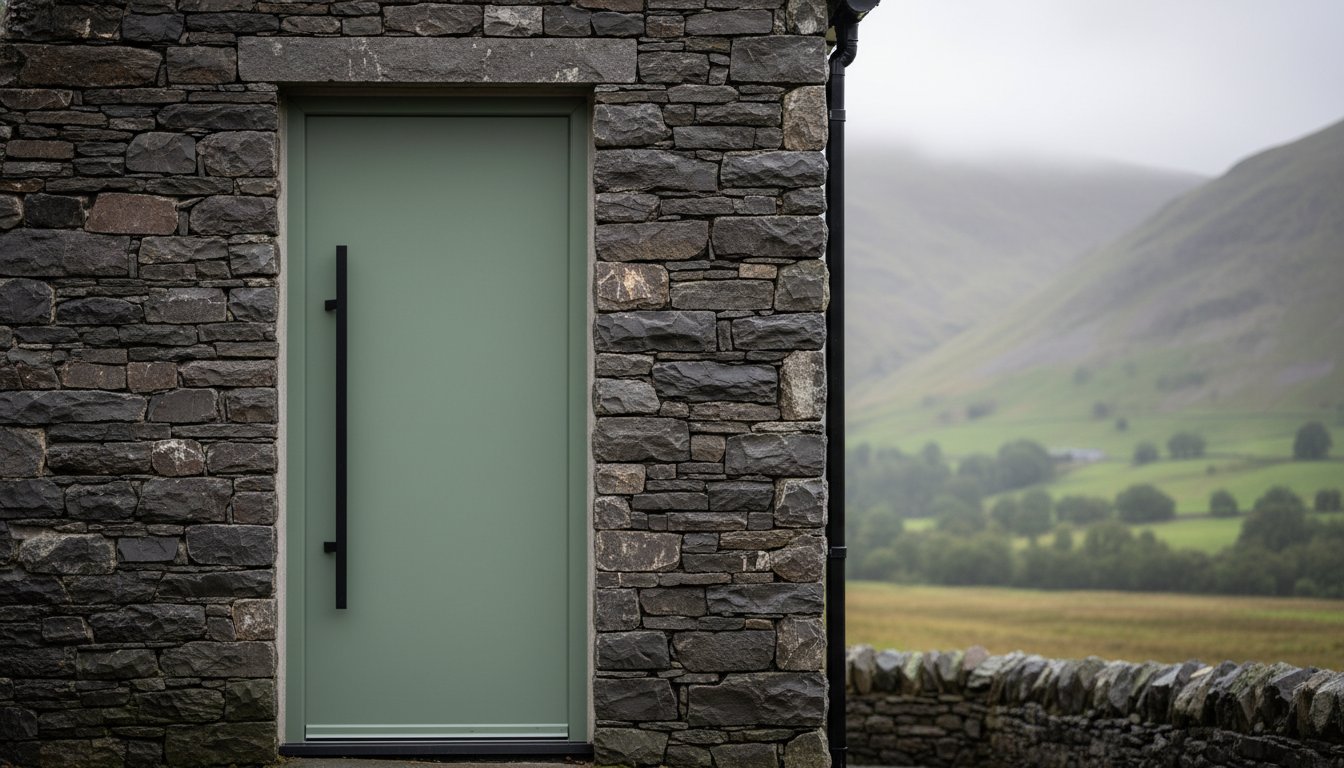
In coastal areas like Barrow or Lancaster, the finish is as critical as the structure. We utilise a marine-grade powder coating process that bonds the colour to the metal at a molecular level. This makes the surface incredibly resistant to salt air corrosion and UV fading. In Carlisle, we've seen a 22% increase in the selection of Anthracite Grey (RAL 7016) for modern renovations since 2025. However, many Lake District properties require bespoke shades to harmonise with local stone or satisfy National Park planning requirements. You can Explore our custom RAL colours to find a match that fits your property’s unique aesthetic. If you're unsure which technical specifications your home requires, you can book a design consultation to discuss your project in detail.
Matching Door Styles to Lake District Architecture
Your home’s entrance is more than just a threshold; it’s a statement of architectural intent. In the Lake District, where property styles range from 17th-century stone cottages to glass-fronted contemporary retreats, a generic approach to design simply won't work. An aluminium door provides the versatility needed to bridge this gap. The choice of an aluminium door for a main entrance now incorporates advanced thermal cores and hardware that meet the rigorous UK security standards for doors. This ensures your home remains a sanctuary against both the elements and intruders, regardless of how remote your location might be.
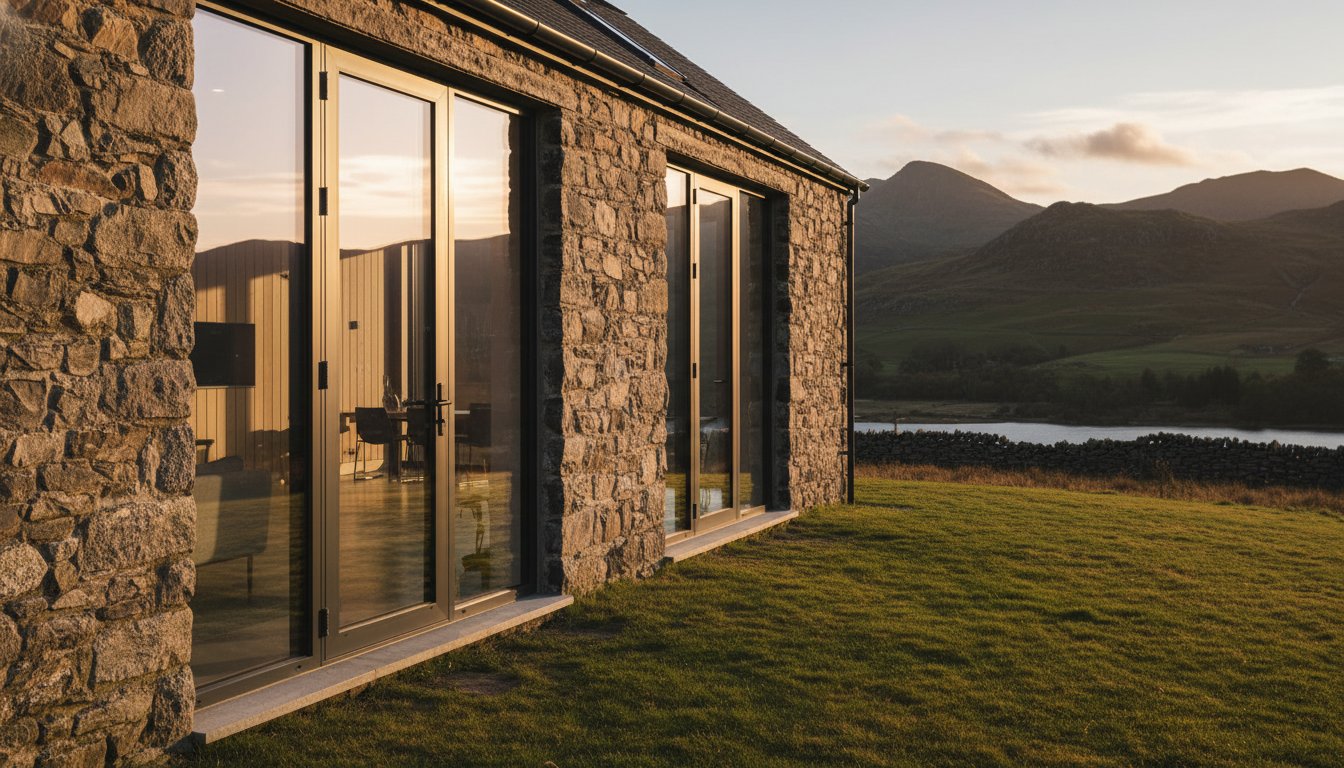
French doors remain a timeless favourite amongst homeowners in Windermere and Ambleside. They offer a classic symmetry that complements traditional Cumbrian stonework whilst providing the modern benefits of slimline glazing. Unlike older timber versions, these don't swell in the damp autumn air, ensuring the latch aligns perfectly every time you step out into the garden. For those with larger openings, the debate between bifolding and sliding systems usually comes down to how you use your space. Bifolding doors allow you to open an entire wall to the garden, whilst sliding doors offer larger, uninterrupted glass panes that are perfect for framing a specific fell-side view.
Heritage Style for Conservation Areas
Planning constraints are a daily reality for many in the Lake District National Park. Planners are often protective of local character, frequently rejecting bulky uPVC profiles that look out of place on historic Victorian terraces in Carlisle or Kendal. Slimline aluminium is a different story. Its ability to mimic the narrow sightlines of original steel or timber frames makes it a preferred choice for conservation officers. For more detail on navigating these specific aesthetic choices, read The Homeowner’s Guide to Premium Aluminium Glazing.
Modern Architectural Glazing
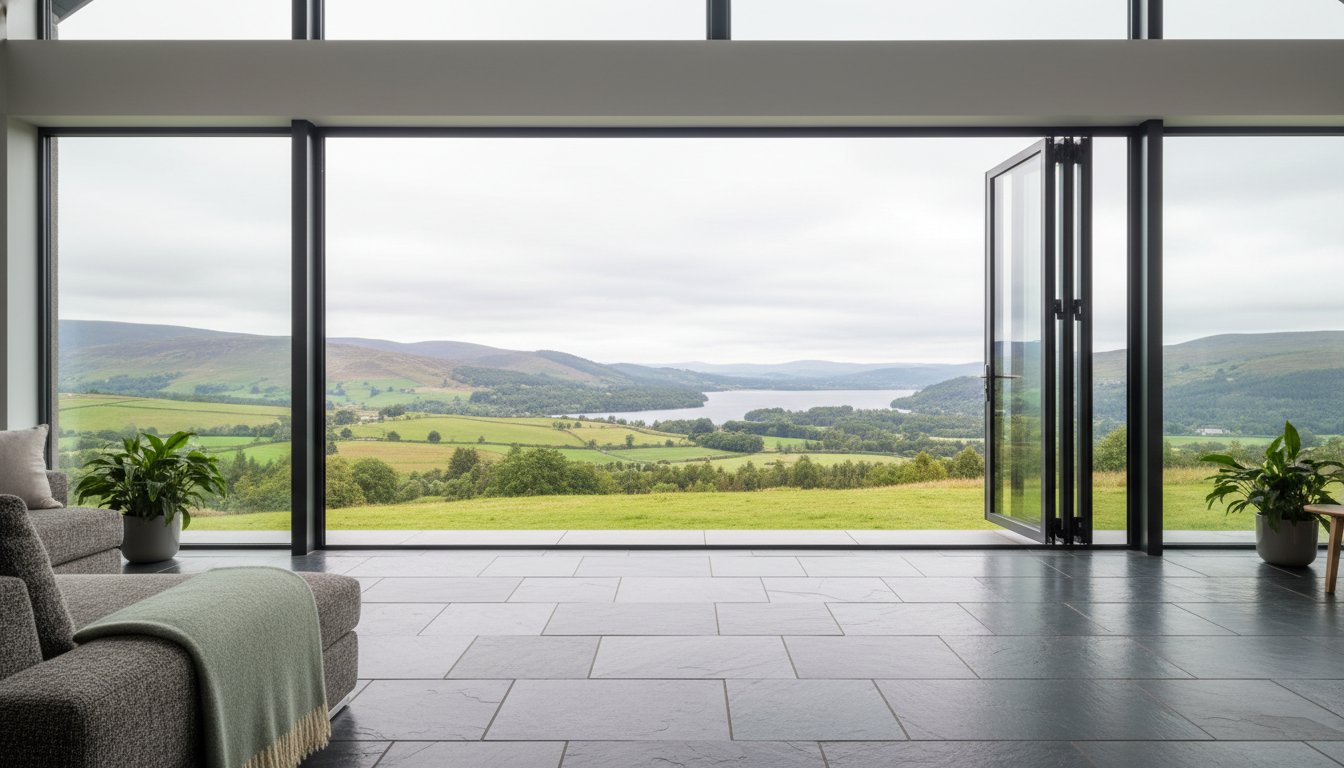
If your property overlooks a lake or a fell, the goal is usually to remove the barrier between inside and out. Large-span sliding doors are increasingly popular for contemporary new builds in Lancaster and the South Lakes. These systems allow for massive glass panels that provide an "uninterrupted" view even when the doors are closed against the rain. You can View our featured projects in Cumbria to see how these ultra-slim frames have transformed local homes with sleek, modern architectural glazing.
The Cumbrian Weather Test: Durability and Maintenance
Cumbria is officially the wettest county in England, with Seathwaite often recording over 3,000mm of rain annually. In these conditions, a high-quality aluminium door is not just a luxury; it's a structural necessity. Unlike timber, which requires repainting every 3 to 5 years to prevent rot and swelling, aluminium remains impervious to moisture. This durability is why aluminium systems are the only sensible choice for coastal properties in Barrow and Lancaster. Salt air is notoriously corrosive, but our marine-grade powder coating provides a protective barrier that prevents the white-rusting common in lesser materials.
Wind-loading is another critical factor, especially for homes in the Eden Valley or high on the fells. An aluminium door is engineered to withstand pressure that would cause uPVC to bow and rattle. This structural stiffness is paired with specialist drainage systems. These hidden channels ensure that even during horizontal Lakeland rain, water is directed away from the internal rebate and safely outside. Maintenance is refreshingly simple. A wipe-down with warm, soapy water once every four months is usually all that's required to keep the finish looking new for 30 years or more.
Protecting Coastal and Exposed Homes
When your home faces the Irish Sea, standard hardware won't suffice. We specify stainless steel handles and hinges to prevent the "pitting" and tarnishing caused by salt spray. Professional fitting is equally vital. Even the highest-quality door will fail if the perimeter seals aren't perfectly aligned to the masonry. Our survey-led installation process ensures that the transition between the frame and the stone is watertight, blocking the moisture ingress that often plagues DIY or supply-only projects.
Security in Rural Cumbria
Security is a top priority for properties in more isolated rural areas. We ensure our products meet PAS 24 and "Secured by Design" certifications, which are the industry benchmarks for resistance to physical attack. These systems typically feature toughened or laminated glass as standard to prevent easy entry through the glazing. Aluminium’s inherent structural strength makes it significantly harder for an intruder to breach or jemmy the frame compared to flexible uPVC. If you want to see how these durable systems look in real-world settings, you can explore our latest Cumbrian case studies.
Professional Installation: Why Local Expertise Matters
Choosing the right aluminium door is only half the battle. The performance of even the most sophisticated glazing system depends entirely on the precision of its installation. In Cumbria, where properties often feature uneven stone masonry and non-standard apertures, a "one size fits all" approach leads to failure. We've spent 35 years as a Penrith-based specialist, developing a process that prioritises local accountability over quick transactions. Unlike national firms that offer supply-only kits, we focus exclusively on a full-service model. This ensures that every project is managed from the initial design consultation through to the final professional seal.
The "Survey-First" approach is our primary safeguard against the errors common in DIY measurements. Many homeowners are tempted to measure their old door frame, but this is a critical mistake. We measure the actual brick or stone opening to account for structural shifts and historical settling. This level of detail is what separates a high-performance installation from a draughty, ill-fitting one. Our reputation as a "safe pair of hands" comes from this meticulous attention to the nuances of regional architecture.
The Survey and Fitting Process
Older properties in Keswick or Alston rarely feature perfectly square openings. During the survey, we identify if structural adjustments are needed to support the weight of a premium aluminium door. This planning prevents the "expensive mistakes" that occur when a frame arrives and doesn't align with the Cumbrian stone. We handle the technical complexities so you don't have to. You can Book a design consultation in Cumbria to ensure your project begins with professional accuracy.
Avoiding the "7 Mistakes" of Glazing
Our "7 Mistakes" framework is designed to protect you from the pitfalls of the glazing industry. One common error is prioritising a low initial price-match over long-term thermal performance. Cheap hardware and inferior seals might save money today, but they'll lead to pitting and heat loss within just a few seasons. Choosing an installer who understands local building regulations and the unique demands of the Lake District is essential for a result that lasts 30 years. We invite you to Start the conversation about your aluminium door project today and benefit from our three decades of regional expertise.
Protecting Your Lakeland Investment
Selecting an aluminium door is about more than just aesthetics; it's a commitment to long-term performance in one of the UK's most demanding climates. You now understand how marine-grade finishes and polyamide thermal breaks work together to exceed the 1.4 W/m²K U-value requirements whilst resisting the horizontal rain of the fells. By choosing a specialist with over 35 years of local Cumbrian experience, you avoid the risks of non-specialist fitting and the compromises of mass-market plastic products.
We pride ourselves on a full-service approach that includes a detailed survey and professional installation, ensuring your new entrance is a perfect fit for your property's unique stonework. There's no need to settle for DIY kits or bulky frames that detract from your home's heritage. Instead, let us help you find a solution that enhances your property's value and thermal comfort for decades to come. Request a bespoke quote for your aluminium door project to start the conversation with our expert team today. Your Lake District home deserves an entrance built to last.
Frequently Asked Questions
Do aluminium doors rust or corrode in the Lake District rain?
Aluminium does not rust or corrode because it naturally forms a protective oxide layer when exposed to air. In coastal towns like Barrow or Lancaster, we apply a marine-grade powder coating that is specifically tested to resist salt-air degradation. This process ensures your frames remain pristine even in the 3,000mm of annual rainfall recorded in Seathwaite.
Can I have an aluminium door in a conservation area in Cumbria?
Slimline aluminium profiles are frequently approved for use in Cumbrian conservation areas. Planners in the Lake District National Park often prefer the narrow sightlines of a bespoke aluminium door because they closely resemble original steel or timber frames. This makes them a superior aesthetic choice compared to bulky uPVC which is often rejected for heritage properties.
What is the average lead time for a bespoke aluminium door installation?
Lead times for bespoke installations typically range from 8 to 12 weeks from the point of final survey. This timeframe allows for the precision manufacturing of your aluminium door and the application of custom powder-coated finishes. Because we handle the full Supply, Survey & Full Installation process, this schedule ensures your project is managed with professional standards from start to finish.
Are aluminium doors more energy-efficient than timber or uPVC?
Modern aluminium systems are exceptionally energy-efficient thanks to high-density polyamide thermal breaks. As of May 2026, all replacement doors must achieve a U-value of 1.4 W/m²K or better to meet Part L Building Regulations. Our units comfortably exceed these standards, providing a level of thermal stability that older timber doors, which are prone to draughts and warping, simply cannot match.
How do I clean and maintain my aluminium door frames?
Maintaining your frames requires nothing more than a simple wipe-down with warm, soapy water every four months. You don't need to repaint or stain the metal because the powder-coated finish is bonded at a molecular level. This zero-maintenance requirement is a primary benefit for busy homeowners who want to avoid the recurring costs associated with timber upkeep.
Is planning permission required to replace my front door with an aluminium one?
Planning permission is generally not required for replacing a front door under Permitted Development rights. However, if your home is a listed building or subject to an Article 4 direction in a conservation area like Kendal, you must consult your local planning authority. We recommend checking with the Lake District National Park Authority if you're making significant structural changes to the opening.
What RAL colours are most popular for homes in the Lake District?
Anthracite Grey (RAL 7016) remains the most popular choice, accounting for approximately 22% of our Carlisle installations in 2025. Other frequent selections include Matt Black (RAL 9005) for contemporary builds and soft creams for traditional cottages. These finishes are applied via a high-temperature process that prevents UV fading for decades.
Do you provide a guarantee on your aluminium door installations?
We provide a comprehensive 10-year guarantee on our aluminium frames and glazing units. This cover reflects our confidence in the 35 years of local Cumbrian expertise we bring to every project. Since we don't sell DIY kits, this guarantee covers both the product quality and the professional standards of our specialist installation team.